Last Updated on June 25, 2026 by Jean Louis
Key Takeaways
- The kitchen is one of the richest listening environments in daily life — hands occupied, mind completely free
- Long cooking techniques — braises, stocks, slow roasts — pair naturally with long-form audio content
- Audiobooks on culinary history, food science, and travel add a layer of intellectual pleasure to time already spent cooking
- A single audiobook subscription pays for itself many times over in hours of genuine enrichment
- The kitchen, approached this way, becomes something more than a place to cook — it becomes a place to think
Short Answer
If you spend serious time in the kitchen, you already have more listening time than most people realise. The question is what you choose to fill it with.
It Started With a Braise
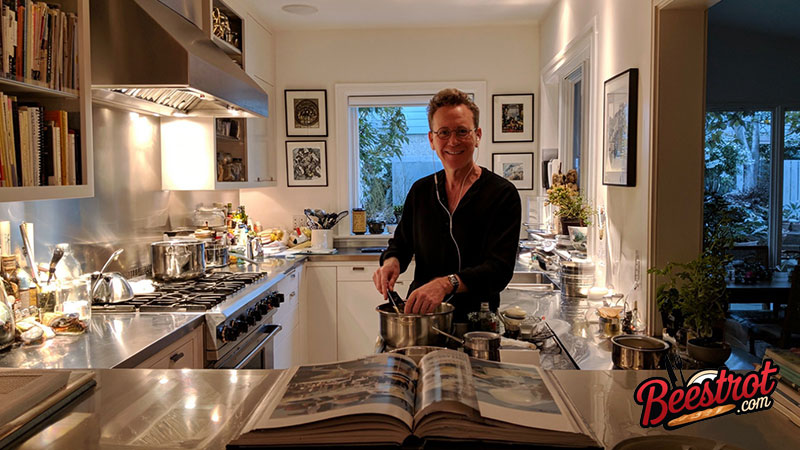
Some years ago, I was preparing a boeuf bourguignon for a dinner that wasn’t until the following evening. The beef was in the pot, the wine was doing its work, and I had approximately three hours ahead of me with nothing to do but maintain a gentle simmer and occasionally stir.
I had already read the morning paper. The kitchen was quiet in the way that kitchens can be quiet — not silent, but settled. The hiss of steam, the occasional bubble rising through the liquid, the smell of thyme beginning to assert itself.
I put in my earbuds more or less by accident, looking for music. Instead I found myself pressing play on a book I had been meaning to read for months — The Omnivore’s Dilemma by Michael Pollan.
By the time the bourguignon was ready, I was four hours in. I had learned more about the industrial food system in an afternoon of cooking than I had in years of reading food journalism. And the beef, it must be said, was excellent.
Something shifted that afternoon. The kitchen had always been where I cooked. Now it was also where I thought.
Why the Kitchen Is the Perfect Listening Room
This is not an accident of my particular circumstances. The kitchen, for anyone who cooks seriously, is structurally one of the best listening environments in daily life.
Consider what cooking actually requires of you. Your hands are occupied — chopping, stirring, seasoning, plating. Your eyes are monitoring — the colour of a roux, the reduction of a sauce, the browning of onions. But your mind, for much of this time, is available. Waiting. Looking for something to engage with.
Music fills this space pleasantly. I have nothing against music — there is a playlist in La Boutique for exactly this purpose. But music, for all its virtues, does not teach you anything. It does not take you anywhere new. It accompanies; it does not expand.
An audiobook does both.
The long techniques are the obvious match. A braise runs three to four hours. A proper stock needs the better part of a day. Bread dough rests. Confit takes time. These are not inconveniences — they are invitations. Invitations to listen to something worth hearing while your hands do what they know how to do.
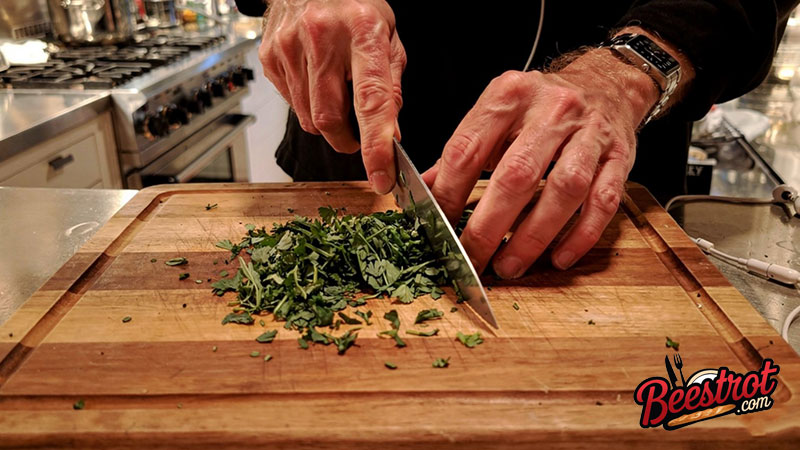
But the short tasks accumulate too. Mise en place before a dinner party. Pastry that needs watching. The twenty minutes of chopping that precedes any serious meal. Individually small; collectively, over the course of a week, they add up to hours.
What I Listen To, And Why It Matters
Not every book works in the kitchen. I have learned this through experience.
Dense technical texts with charts, footnotes, and complex structure require eyes as much as ears. Legal theory, academic philosophy, anything with tables — save these for the armchair.
What works beautifully:
Culinary history and food writing. This is the obvious starting point for anyone who cooks seriously. The Art of Eating by M.F.K. Fisher. Consider the Oyster. Anything by Elizabeth David in audio is a revelation — prose so precise it deserves to be heard aloud. These books become richer when listened to in the environment they describe.
Travel and place. A long braise is an excellent opportunity to spend two hours in a Provençal village, a Tokyo fish market, or a Sicilian grandmother’s kitchen without leaving your own. The sense of place that good travel writing creates pairs surprisingly well with the physical act of cooking.
Biography and memoir. The lives of chefs, farmers, producers, scientists. Kitchen Confidential in audio — Bourdain reading his own words — is an experience I would recommend to anyone. Unambiguously.
Food science. On Food and Cooking by Harold McGee is not light listening, but it rewards patience. Understanding why a sauce breaks, why bread crumbs differently at different hydrations, why acid brightens flavour — this is knowledge that improves everything you cook. Better absorbed, I find, when your hands are already in the work.
For all of this, I use Audible. One credit per month covers most of what I need, and the catalogue of included titles has grown considerably. The free trial is the sensible entry point — a credit immediately, no commitment required, and enough time to establish whether listening in the kitchen becomes the habit I suspect it will.
For those who prefer unlimited access without managing credits — particularly useful if your cooking sessions are frequent and your curiosity is broad — there are subscription options worth exploring beyond the standard plan.
A Note on Food Documentaries
The kitchen has one limitation as a listening environment: you cannot always watch. But there are evenings — long preps, pastry work, anything that does not require your full visual attention — where a food documentary playing on a tablet propped against the backsplash becomes its own kind of pleasure.
Jiro Dreams of Sushi. The Chef’s Table series. Anything that takes you into a professional kitchen and shows you what obsession with craft actually looks like. These are not background viewing — they are education in the guise of entertainment, and the kitchen is precisely the right place to watch them.
Alors, Chef?
The bourguignon that started all of this is still, I think, one of the better ones I have made. I cannot say with certainty whether Michael Pollan improved the beef or merely improved my afternoon. Perhaps both.
What I know is that the kitchen — already a place I love — became something larger when I started treating the time spent there as listening time. Richer. More layered. The cooking did not suffer. If anything, the attention required to follow a good book made me a more present cook, not a more distracted one.
You already spend the time. The only question is what you do with it.
Cook. Learn. Inspire.
Jean Louis
Frequently Asked Questions
Does listening while cooking affect the quality of what you cook?
In my experience, no — and often the opposite. Tasks that are largely manual and repetitive, like chopping, stirring, or monitoring a long braise, benefit from mental engagement rather than suffering from it. Where full concentration is required — a delicate sauce, a precise pastry technique — you simply pause. The book will wait.
What kind of audiobooks work best for cooking sessions?
Narrative non-fiction, culinary history, travel writing, and biography translate best to audio in a kitchen environment. Avoid anything that relies heavily on visual elements — charts, recipes, technical diagrams. The best kitchen audiobooks are those written with a strong authorial voice and a clear narrative thread.
How do you manage listening across multiple cooking sessions?
Most audiobook apps remember your position precisely. A braise interrupted by dinner service picks up exactly where it left off the following morning. Over the course of a week, a single book accompanies several different cooking sessions — which, practically speaking, means you finish more books than you expect.
Is there a meaningful difference between audiobook subscription tiers?
The standard plan offers one credit per month — sufficient for most listeners who want one substantial book at a time. Premium tiers add unlimited access to a broader catalogue, which suits those who cook frequently and consume content quickly. I would suggest starting with the standard plan and adjusting based on how quickly the habit develops.
What are your current top recommendations for kitchen listening?
Kitchen Confidential — Bourdain, read by Bourdain. The Omnivore’s Dilemma — Pollan. On Food and Cooking — McGee, for the serious cook willing to work for it. And for pure pleasure, anything by M.F.K. Fisher in a good audio edition. Start with any one of these and you will not be disappointed.
Sources
- Pollan, M. The Omnivore’s Dilemma. Penguin Press, 2006.
- McGee, H. On Food and Cooking: The Science and Lore of the Kitchen. Scribner, 2004.
- Rogowsky, B.A., Calhoun, B.M., & Tallal, P. (2016). Matching learning style to instructional method: Effects on comprehension. Journal of Educational Psychology. https://pubmed.ncbi.nlm.nih.gov/26877776/
- Fisher, M.F.K. The Art of Eating. Wiley, 2004.