Sushi Rolls (Maki)
Click here to learn about our image policy and how to submit your own!
Sushi is Japan's most recognized gift to global cuisine, though what most of the world calls sushi is really maki - rice and fillings rolled in nori seaweed. The word sushi refers to the vinegared rice itself, a preservation technique refined over centuries before it became the art form it is today. Making maki at home requires a bamboo mat, good short-grain rice, and patience with the rolling technique - but once mastered, it opens an entire universe of combinations. The satisfying crunch of nori, the tang of sushi rice, and whatever you choose to put inside makes every roll feel like a small achievement.
Time & Quantities
Method & Ingredients
Required Equipment: Rice cooker or medium saucepan with lid, bamboo rolling mat, sharp knife, small bowl of water

Cuisinart Custom 14-Cup Food Processor
Chops, slices, shreds, purees, handles anything from pastry dough to coleslaw. The food processor that turns 30-minute prep into 5 minutes.
View on AmazonCooking Method: No-Cook
Ingredients
- 2 cups Japanese short-grain sushi rice
- 2.5 cups cold water
- 4 tbsp rice vinegar
- 2 tbsp sugar
- 1 tsp salt
- 6 sheets nori
- 200g sushi-grade tuna or salmon (sliced into strips)
- 1 cucumber (cut into thin batons)
- 1 avocado (sliced)
- For serving: soy sauce
- pickled ginger
- wasabi paste
Instructions
- Rinse rice in cold water until water runs clear - at least 5 rinses. This removes excess starch and is the difference between sticky gluey rice and properly firm sushi rice. Cook rice with cold water: bring to boil, cover, reduce heat to very low for 15 minutes, then rest off heat 10 minutes. Do not lift the lid during cooking.
- Mix rice vinegar, sugar, and salt until dissolved. Spread cooked rice onto a wide flat dish and fold in the seasoning with a spatula using cutting motions - never stir, which breaks the grains. Fan the rice as you fold to cool it quickly. The rice should be glossy, slightly tacky, and at body temperature before rolling.
- Place bamboo mat on a flat surface. Lay a nori sheet shiny-side down on the mat. With damp hands, spread a thin even layer of rice over the nori, leaving a 2 cm gap at the far edge. The rice layer should be thin enough to see the nori through it.
- Arrange fillings in a horizontal line across the center of the rice. Less filling than you think - overfilling produces rolls that explode dramatically during cutting, which is entertaining but wasteful.
- Lift the near edge of the mat and roll firmly over the fillings, tucking the edge of the nori under. Continue rolling, applying gentle even pressure. Seal the bare nori edge with a little water.
- Rest rolls seam-side down for 2 minutes before cutting. With a very sharp wet knife, cut each roll into 8 pieces using a single smooth slicing motion - sawing back and forth crushes the roll.
- Arrange on a plate with soy sauce, pickled ginger, and wasabi on the side.
Storage & Make-Ahead
Storage Advice: Sushi is best eaten the day it is made. Refrigerating assembled rolls dries the nori and hardens the rice. If storing overnight, wrap tightly in cling film.
Make-Ahead & Freezing Tips: Sushi rice can be made ahead and kept at room temperature for up to 4 hours covered with a damp cloth. Do not refrigerate unrolled rice. Do not freeze assembled rolls.
Nutritional & Dietary Information
Nutritional Information:
- Calories: 320
- Protein: 18g
- Fat: 8g (Saturated: 1g)
- Carbohydrates: 46g (Fiber: 3g / Sugar: 4g)
- Vitamin A: 6% DV
- Vitamin C: 10% DV
- Calcium: 4% DV
- Iron: 8% DV
Allergen Information: Contains fish (raw), gluten (soy sauce, nori may contain traces). Wasabi may contain horseradish.
Dietary Information: Contains raw fish and gluten. Not suitable for those avoiding raw fish, pregnant women, or gluten-free diets without tamari substitution.
Serving & Variations
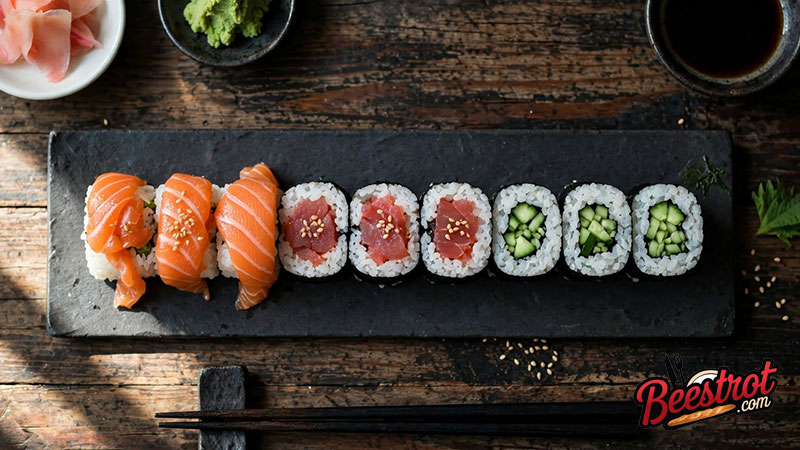
Serving Suggestions: Serve on a wooden board or slate with small dishes of soy sauce, wasabi, and pickled ginger. Present each roll cut-side up to show the filling cross-section. A single chrysanthemum or shiso leaf adds an elegant Japanese touch.
Wine or Drink Pairing: Cold Junmai Ginjo sake from Niigata - clean, dry, and subtly fruity - is the ideal partner for delicate raw fish. A crisp Chablis Premier Cru from Burgundy works beautifully too, its mineral salinity complementing the nori and fish.
Possible Recipe Variations: Beestrot Signature: Mix a teaspoon of toasted sesame oil into the sushi rice seasoning alongside the rice vinegar - it adds a barely-there nuttiness that makes the rice taste like it came from a good sushi restaurant rather than a home kitchen. Variations: California Roll - replace raw fish with cooked crab or surimi, cucumber, and avocado for a beginner-friendly version. Spicy Tuna Roll - mix diced tuna with sriracha and sesame oil. Vegetarian Maki - cucumber, avocado, and pickled daikon make an excellent plant-based roll.
Additional Notes: Only use sushi-grade fish labeled specifically for raw consumption. The rice temperature is critical - too hot and it tears the nori, too cold and it becomes hard and unworkable.