Miso Soup

Click here to learn about our image policy and how to submit your own!
Miso soup is Japan's daily ritual - served at breakfast, lunch, and dinner, it is as much a part of Japanese life as rice itself. The base is dashi, a broth made from kombu seaweed and dried bonito flakes that is the foundation of almost all Japanese cooking, with an umami depth that Western stocks take hours to approximate in minutes. The miso paste - fermented soybean paste aged anywhere from weeks to years - is dissolved into the warm dashi at the last moment, never boiled, preserving its complex living flavors. This is a bowl of quiet, ancient simplicity that rewards attention.
Time & Quantities
Method & Ingredients
Required Equipment: Medium saucepan, fine mesh strainer, ladle

Vitamix E310 Explorian Blender
Silky smooth soups, nut butters, smoothies and sauces. Variable speed, self-cleaning, built for decades of use. The blender serious cooks actually buy.
View on AmazonCooking Method: Stovetop - Sauteing
Ingredients
- 4 cups cold water
- 1 piece kombu (10cm / wiped with a damp cloth)
- 20g dried bonito flakes (katsuobushi)
- 3 tbsp white or red miso paste
- 150g silken tofu (cut into 1 cm cubes)
- 2 spring onions (thinly sliced)
- 4 pieces wakame seaweed (dried / rehydrated in cold water)
Instructions
- Make the dashi: add kombu to cold water in a saucepan. Heat slowly over medium heat. Just before the water reaches a boil - when small bubbles form at the bottom of the pot - remove the kombu. Never boil kombu or it releases a bitter sliminess that ruins the dashi.
- Bring the kombu water to a full boil. Add all the bonito flakes at once. Reduce heat immediately and simmer 2 minutes - do not stir. The flakes will sink to the bottom when done.
- Strain through a fine mesh strainer, pressing the bonito lightly. The resulting dashi should be pale golden and smell of the sea in the most pleasant possible way.
- Return dashi to the pan over medium-low heat. Add tofu cubes gently - they are fragile and deserve respect. Warm through without boiling.
- Rehydrate wakame by soaking in cold water 5 minutes, drain and add to the soup.
- This is the most critical step: place miso paste in a ladle or small bowl. Scoop a little hot dashi into it and whisk until completely smooth before stirring back into the pot. Never add miso paste directly to the full pot - it clumps. And never boil the soup after adding miso or the living fermented cultures die and the flavor flattens.
- Serve immediately in small bowls, scattered with spring onion. The soup should be hot but not steaming aggressively.
Storage & Make-Ahead
Storage Advice: Dashi keeps refrigerated up to 3 days. Do not store assembled miso soup - miso continues to ferment and the flavor changes. Make fresh dashi and add miso per serving.
Make-Ahead & Freezing Tips: Dashi freezes well for up to 1 month in ice cube trays. Do not freeze assembled miso soup.
Nutritional & Dietary Information
Nutritional Information:
- Calories: 65
- Protein: 5g
- Fat: 2g (Saturated: 0g)
- Carbohydrates: 7g (Fiber: 1g / Sugar: 2g)
- Vitamin A: 4% DV
- Vitamin C: 2% DV
- Calcium: 8% DV
- Iron: 8% DV
Allergen Information: Contains soy (miso, tofu), fish (bonito flakes). Gluten-free if using gluten-free miso.
Dietary Information: Contains soy and fish. Dairy-free and egg-free as written. Check miso label for gluten - some contain barley or wheat.
Serving & Variations
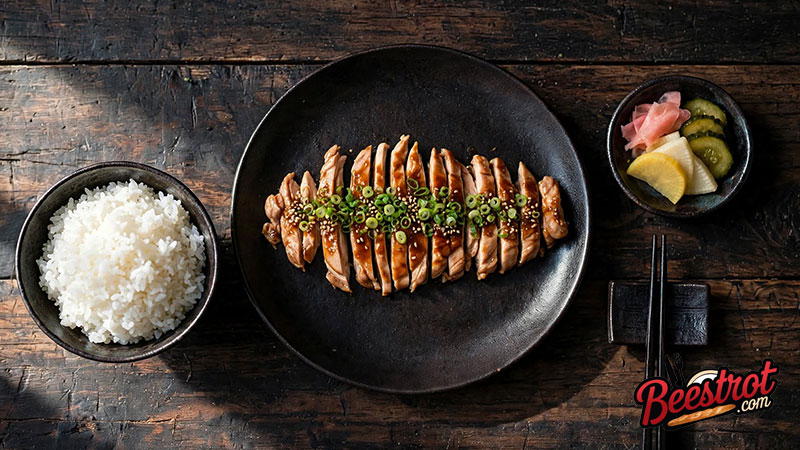
Serving Suggestions: Serve in small lacquerware bowls if you have them - the dark surface makes the golden broth glow. Miso soup is a companion dish, not a standalone meal. Serve alongside steamed rice and grilled fish or teriyaki for a complete Japanese meal.
Wine or Drink Pairing: Warm Junmai sake from Niigata - served in a small ceramic cup - is the traditional accompaniment that transforms a bowl of miso soup into a moment of quiet Japanese hospitality. Green tea also works beautifully.
Possible Recipe Variations: Beestrot Signature: Finish each bowl with 3 drops of high-quality sesame oil swirled on the surface just before serving - the fragrant oil adds a richer dimension that makes simple miso soup taste like something a Tokyo chef would serve. Variations: Clam Miso Soup - add small clams to the dashi and simmer until they open for a coastal version. Mushroom Miso - replace bonito with dried shiitake for a vegetarian dashi, add mixed mushrooms to the soup. Hearty Winter Miso - add daikon, potato, and pork belly to make tonjiru, a full meal in a bowl.
Additional Notes: White miso (shiro miso) produces a sweeter and milder soup. Red miso (aka miso) is saltier and more intense. Most Japanese households keep white miso for daily soup and red miso for heartier winter versions.