Green Curry (Gaeng Keow Wan)
Click here to learn about our image policy and how to submit your own!
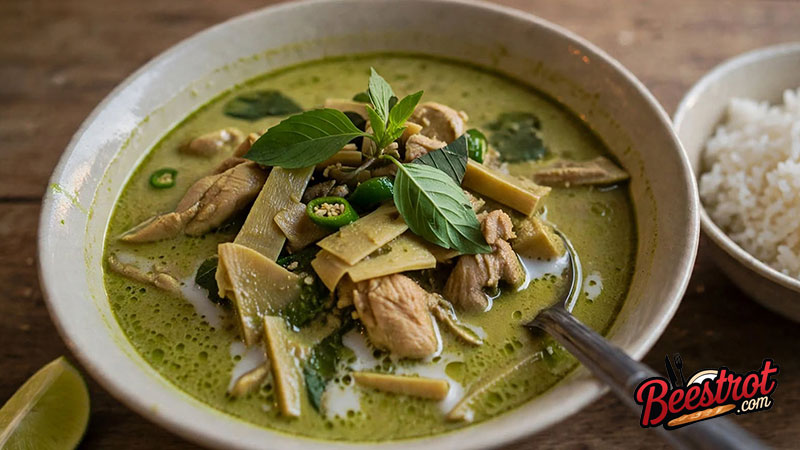
Thai green curry is the most vibrant and aromatic of Thailand's famous curry trinity, its color coming not from green vegetables added after cooking but from the fresh green chilies, lemongrass, galangal, and kaffir lime leaves pounded into the paste that forms its foundation. Gaeng Keow Wan translates literally as sweet green curry - a reference to the color of young chilies rather than the flavor, which is anything but mild. The curry arrived in royal Thai cuisine centuries ago and was refined in the palace kitchens of Bangkok before conquering the world's takeout menus. Coconut milk tempers the heat into something deeply complex and profoundly satisfying.
Time & Quantities
Method & Ingredients
Required Equipment: Wok or large saucepan, wooden spoon

Alpha Grillers Meat Thermometer Digital
Perfect steak, safe chicken, ideal bread — every time. Reads in 2 seconds, waterproof, folds flat. The $15 tool that ends overcooked meat forever.
View on AmazonCooking Method: Stovetop - Sauteing
Ingredients
- 400ml coconut milk (full fat)
- 2 tbsp green curry paste (store-bought or homemade)
- 500g chicken thighs (boneless / cut into chunks)
- 1 cup chicken stock
- 2 tbsp fish sauce
- 1 tbsp palm sugar (or brown sugar)
- 4 kaffir lime leaves (torn)
- 1 stalk lemongrass (bruised)
- 1 cup Thai eggplant (quartered) or regular eggplant (cubed)
- 1 cup zucchini (sliced)
- 1 cup baby spinach
- 1 red chili (sliced for garnish)
- 1 handful fresh Thai basil leaves
- 1 tbsp vegetable oil
- steamed jasmine rice to serve
Instructions
- Heat oil in a wok over medium heat. Add green curry paste and fry for 2 minutes, stirring constantly, until fragrant and the raw smell cooks out. This step blooms the spices and is the difference between paste that tastes tinned and paste that tastes alive.
- Add half the coconut milk, stir to combine with the paste. Increase heat to medium-high and cook for 3 minutes, stirring, until the coconut milk reduces slightly and oil begins to separate on the surface - this is called cracking the coconut and means the paste is properly cooked.
- Add chicken pieces, stir to coat in the curry base. Cook 5 minutes until the outside of the chicken is sealed.
- Add remaining coconut milk, chicken stock, fish sauce, palm sugar, kaffir lime leaves, and lemongrass. Bring to a gentle simmer.
- Add eggplant and zucchini. Simmer 12-15 minutes until chicken is cooked through and vegetables are tender. Taste and adjust fish sauce for salt and palm sugar for sweetness - the balance should make your eyes widen slightly.
- Remove lemongrass stalk. Add baby spinach and stir until wilted, 1 minute.
- Finish with fresh Thai basil leaves - add them off the heat to preserve their aroma. Garnish with sliced red chili and serve immediately over jasmine rice.
Storage & Make-Ahead
Storage Advice: Refrigerate up to 3 days. Curry intensifies in flavor overnight - often better the next day. Reheat gently over low heat, adding a splash of coconut milk if too thick.
Make-Ahead & Freezing Tips: Freeze for up to 2 months. Coconut-based curries freeze well. Thaw overnight, reheat gently. Add fresh Thai basil only after reheating.
Nutritional & Dietary Information
Nutritional Information:
- Calories: 420
- Protein: 32g
- Fat: 26g (Saturated: 18g)
- Carbohydrates: 16g (Fiber: 3g / Sugar: 6g)
- Vitamin A: 20% DV
- Vitamin C: 25% DV
- Calcium: 8% DV
- Iron: 14% DV
Allergen Information: Contains fish (fish sauce), shellfish traces possible in some curry pastes. Gluten-free if using gluten-free curry paste. Dairy-free.
Dietary Information: Contains fish. Dairy-free and gluten-free as written (check curry paste label). Not suitable for fish allergies without substitutions.
Serving & Variations
Serving Suggestions: Serve in deep bowls over jasmine rice with a small side of sliced cucumber in rice vinegar for cooling contrast. Present with a fresh red chili and a few Thai basil leaves on top for color and aroma at the table.
Wine or Drink Pairing: A cold Gewurztraminer from Alsace - aromatic, slightly sweet, and spicy in its own right - is one of the classic matches for Thai green curry. A New Zealand Pinot Gris from Marlborough also works beautifully, its tropical fruit notes echoing the coconut milk.
Possible Recipe Variations: Beestrot Signature: Stir in a tablespoon of good quality peanut butter with the curry paste at the start - it adds a subtle nuttiness and body that rounds the heat into something even more complex without making it taste like peanut curry. Variations: Vegetarian Green Curry - replace chicken with tofu and mixed vegetables, replace fish sauce with soy sauce. Prawn Green Curry - substitute large prawns, reduce cooking to 5 minutes total. Fish Green Curry - use firm white fish fillets, add in the last 8 minutes only.
Additional Notes: Cracking the coconut - cooking the paste with half the coconut milk until oil separates - is the essential technique. Skipping it produces a thin curry that tastes raw and flat. Kaffir lime leaves and Thai basil are both worth seeking out at an Asian grocer.