Greek Salad (Horiatiki)
Click here to learn about our image policy and how to submit your own!
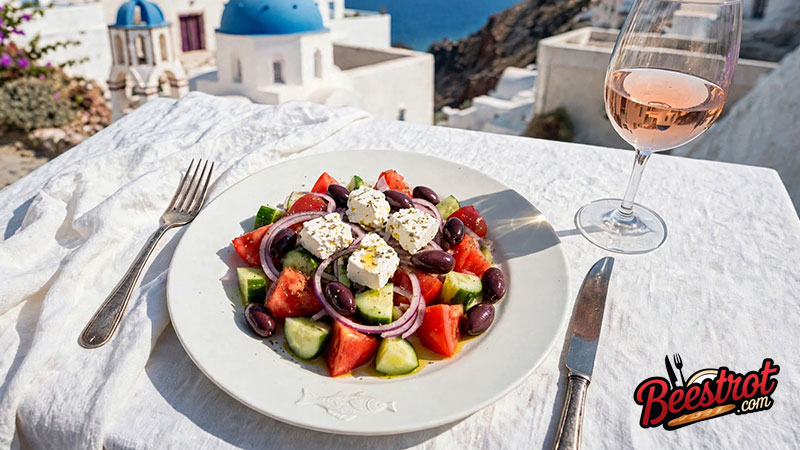
Outside Greece, what passes for Greek salad is often a pale imitation. Inside Greece, the real Horiatiki (village salad) arrives as a generous mound of chunky vegetables dressed in nothing but excellent olive oil, a splash of red wine vinegar, and dried oregano, crowned with a thick slab of feta that has never seen a crumble in its life. No lettuce. No dressing made in a factory. No apologies. It has been served this way in every Greek taverna since the mid-20th century and will continue to be served this way long after current food trends have come and gone. The secret is summer-ripe tomatoes and olive oil worth tasting on its own.
Method & Ingredients
Required Equipment: Large salad bowl or individual plates, sharp knife



Cooking Method: No-Cook
Ingredients
- 4 large ripe tomatoes (cut into wedges)
- 1 cucumber (partially peeled in stripes / cut into thick rounds)
- 1 green bell pepper (cut into rings)
- 1 red onion (thinly sliced)
- 16 Kalamata olives (pitted)
- 200g feta cheese (in one thick slab / not crumbled)
- 4 tbsp extra-virgin olive oil (Greek / fruity)
- 1 tbsp red wine vinegar
- 1 tsp dried Greek oregano
- salt and black pepper
Instructions
- Cut all vegetables into large rustic chunks - this is not a salad of thin slices. Tomatoes into 6 wedges, cucumber into thick half-moons, pepper into rings. The size is part of the identity.
- Arrange tomatoes, cucumber, green pepper, and red onion in a wide bowl or on a plate. Do not toss - layer them casually like a Greek grandmother who has done this ten thousand times.
- Scatter Kalamata olives across the top.
- Place the feta slab on top whole - do not crumble it. The whole slab is the visual centerpiece and it allows each person to break off as much as they want. This is the rule.
- Drizzle olive oil generously over everything - and we mean generously. This is not the moment for restraint. Add a splash of red wine vinegar.
- Finish with a heavy pinch of dried oregano rubbed between your fingers to release the oils / a pinch of salt, and a few grinds of black pepper.
- Serve immediately at the table and let everyone break into the feta slab themselves. Provide bread to mop up the dressing that pools at the bottom - that puddle of tomato juice, olive oil, and feta brine is the best part of the whole salad.
Storage & Make-Ahead
Storage Advice: Best eaten immediately. Leftovers keep 1 day refrigerated but the tomatoes become watery. Do not make ahead with dressing applied.
Make-Ahead & Freezing Tips: Not suitable for freezing. Do not pre-dress for meal prep - store vegetables and dressing separately and assemble to order.
Nutritional & Dietary Information
Nutritional Information:
- Calories: 245
- Protein: 8g
- Fat: 20g (Saturated: 7g)
- Carbohydrates: 12g (Fiber: 3g / Sugar: 8g)
- Vitamin A: 25% DV
- Vitamin C: 65% DV
- Calcium: 22% DV
- Iron: 8% DV
Allergen Information: Contains dairy (feta). Gluten-free.
Dietary Information: Gluten-free and vegetarian as written. Contains dairy. Not suitable for vegan or dairy-free diets.
Serving & Variations
Serving Suggestions: Serve as a first course or alongside grilled meat. Place in the center of the table with a basket of crusty bread. In summer / serve chilled plates straight from the fridge for maximum refreshment.
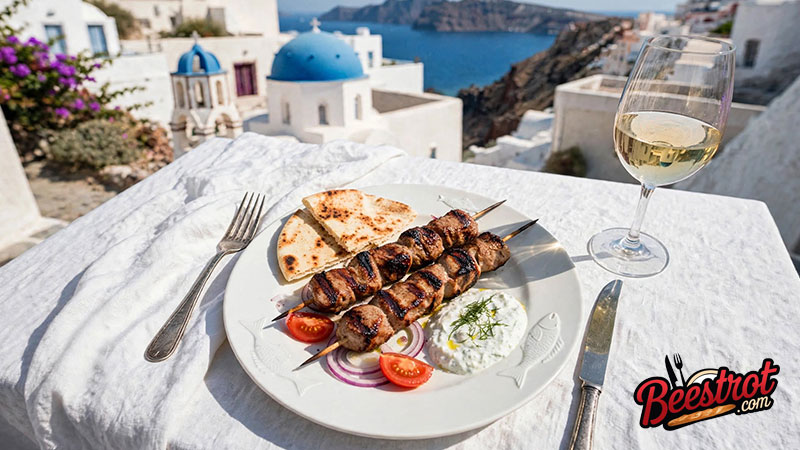
Wine or Drink Pairing: A chilled glass of Assyrtiko from Santorini is the definitive match - its saline mineral quality mirrors the feta and olives in a way that feels inevitable. A Moschofilero from Mantinia, floral and crisp, is an equally beautiful Peloponnesian alternative.
Possible Recipe Variations: Beestrot Signature: Add a few thin slices of preserved lemon rind alongside the feta - their concentrated citrus punch amplifies the brightness of the tomatoes and creates a complexity that makes the salad taste like it has a secret. Variations: Add capers and sun-dried tomatoes for a more intense version. Santorini version - add white caper leaves and small sweet Santorini tomatoes for the island style. Winter version - replace fresh tomatoes with roasted cherry tomatoes for a sweeter cold-weather adaptation.
Additional Notes: The quality of olive oil is the difference between a good Greek salad and an extraordinary one. Use the best Greek extra-virgin you can find - the flavor carries the whole dish. Never use lettuce and never toss the salad.