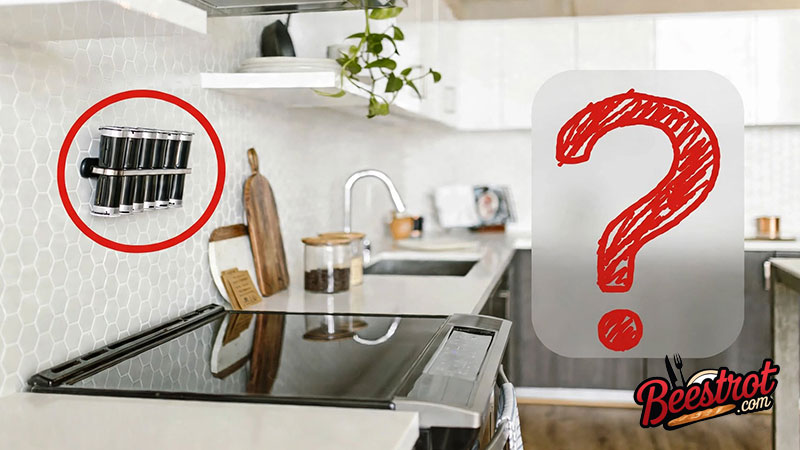
The spice rack above the stove is in almost every kitchen. It is decorative, convenient, and one of the most reliable ways to ruin every spice you own.
Heat rises. Every time the burners run, warm air moves upward and settles around the jars. The volatile compounds that give a spice its character begin to dissipate. The cumin that smelled sharp and earthy last year smells of almost nothing now. You added more of it to compensate without realising what had actually happened.
The problem is not the quantity. It is the storage.
The Three Enemies of a Spice
Spices are not durable. They are dried plant material, and the compounds that make them useful are fragile. Three things destroy them reliably: heat, light, and moisture.
Heat accelerates the evaporation of volatile oils. Every time the temperature around your spice rack rises, a small amount of what you are trying to preserve escapes into the air. The process is invisible and cumulative. A jar sitting above an active stove for twelve months is not the same jar it was when you bought it.
These Kitchen Gadgets Solve a Problem You Forgot You Had.
Small, smart, oddly satisfying. The kind of find you send to every food lover you know.
Find Your GadgetLight does similar damage through a different mechanism. Ultraviolet exposure breaks down the chemical compounds responsible for color and flavor. This is why serious spice merchants use opaque tins or dark glass. A transparent jar on a sunny windowsill is decorative. It is also accelerating the degradation of everything inside it.
Moisture causes a third category of damage. Steam from cooking, condensation from temperature changes, and the ambient humidity of a kitchen all create conditions for clumping and, eventually, microbial growth. A spice that has absorbed moisture does not just taste different. It may no longer be safe to use.
The essential oils in spices begin degrading within months of grinding. Ground spices stored in transparent jars in warm, lit conditions near a stove may be largely inert by the time most kitchens finish the jar. The color remains. The flavor does not.
Why Whole Spices Change Everything
The most significant thing a professional kitchen does differently is buy whole spices and grind them as needed. This is not a performance or an affectation. It is the most direct way to extend the useful life of a spice by a factor of three to four.
A whole spice is its own storage container. The cell structure of the seed, bark, or berry protects the volatile oils inside until the moment of grinding. Once ground, those oils begin to dissipate immediately. Ground cumin purchased from a supermarket shelf has already lost a portion of its potency before it reaches your kitchen. Ground cumin you grind yourself five minutes before using it has lost almost none.
A dry pan, thirty seconds over medium heat to toast, and a spice grinder or mortar: that is the professional method for most seeds, peppercorns, and dried chilies. The difference in a finished dish is not subtle. It is the difference between a spice that contributes something and one that contributes heat and color and very little else.
Whole spices stored correctly retain useful potency for two to four years. Ground spices under the same conditions typically lose most of their aromatic compounds within six to twelve months. Most home spice collections contain ground spices well past the point where they contribute meaningfully to a dish.
The Test That Tells You When to Throw Them Out
There is a simple test for any spice you are unsure about. Take a small amount between your fingers and rub. Hold it close and smell immediately. A viable spice releases a clear, strong, identifiable aroma within two seconds. If you have to search for a smell, or if the smell is faint and generic rather than specific, the spice has lost its potency.
This test works for dried herbs as well. Dried thyme that smells of dried grass and nothing else is not thyme anymore. It is vegetable matter. It will add color to a dish and nothing more.
Most home cooks do not throw out spices. They buy new jars and push the old ones to the back of the drawer. Professional kitchens date every container at the moment it is opened and discard on a schedule. The discipline is not excessive. It is part of the reason restaurant food tastes the way it does.
Many home cooks report that their dishes occasionally lack depth of flavor despite following a recipe precisely. Dead spices are one of the most common causes, and among the least obvious, because the jars still look full and the labels still say the right words.
What a Chef Actually Does
The professional approach to spice storage comes down to four principles: dark, cool, dry, airtight. A drawer away from the stove. A cupboard with no light source. A container that seals properly. A quantity small enough to use within a reasonable time.
Chefs do not buy large jars of spices because they are economical. They buy small quantities, frequently. The cost of a fresh spice is lower than the cost of building an entire dish around something that contributes nothing.
The spice rack above the stove is not where spices live. It is where spices go to degrade in a way that is visually satisfying and functionally invisible, right up until the moment you wonder why your food tastes flat despite following the recipe exactly.
The answer has been sitting in those jars for a while now. It just no longer smells like much.
Every spice carries a world inside it. I am just learning to listen.
Jean Louis
Sources
- Serious Eats, How to Store Spices Properly
- America’s Test Kitchen, Guide to Storing Spices
- BBC Good Food, How to Store Spices
- The Kitchn, The Best Way to Store Spices
- Food Network, How to Store Spices So They Last Longer
More Delicious Reads

The Michelin Star Was Invented to Sell Tyres. The Brothers Had No Interest in Food.
Canned Food Was Invented 50 Years Before the Can Opener. People Used Hammers and Chisels. Nobody Saw...

The Humble Origins of Bistrot: How Small Kitchens Shaped Parisian Dining Culture
The French Did Not Invent French Fries. Belgium Is Still Angry About This.
Pasta Did Not Come From China. The Marco Polo Story Is a Myth. Here Is the Real One.
Resting Your Meat Is Not Optional. Here Is What Actually Happens If You Skip It.

Tea Was Not a British Tradition Until 1662. One Portuguese Woman Changed Everything.
How You Cut Garlic Changes What It Tastes Like. Four Cuts, Four Flavours.
The Fork Was Considered Sinful in Medieval Europe. The Church Had Opinions.

