Last Updated on October 9, 2026 by Jean Louis
The Instrument of the Devil
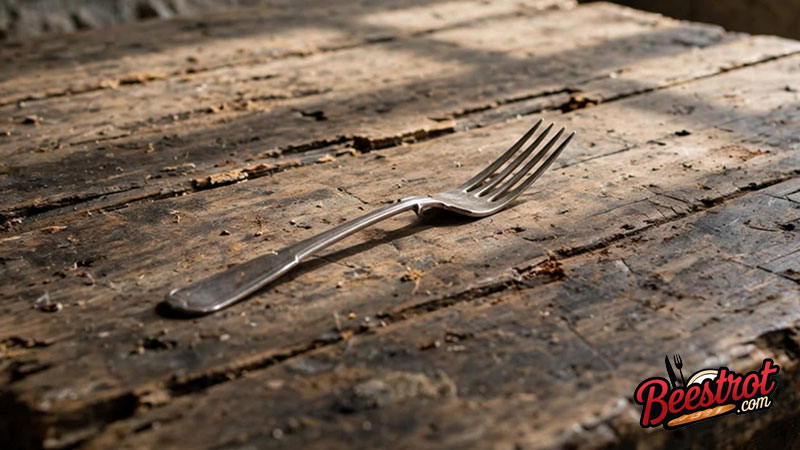
In the eleventh century, a Byzantine princess arrived in Venice to marry the Doge son. She brought with her a small golden case. Inside it: two-pronged forks. She used them at the wedding banquet to lift food to her mouth rather than using her fingers. The Venetian clergy were not impressed. Saint Peter Damian, a prominent churchman of the era, recorded her behaviour and condemned it. God, he wrote, had given human beings natural forks: their fingers. To spurn them for a metal instrument was to show contempt for divine design. The princess died shortly after of plague, which the clergy took as confirmation of their position. This was not an isolated opinion. It was the prevailing one, and it would hold for centuries.What Fingers Were For
Before the fork, eating with your hands was not a sign of poor manners. It was the correct way to eat. Medieval dining had its own elaborate etiquette: you washed your hands before the meal, you used three fingers rather than five, you did not double-dip into shared dishes, you wiped your hands on a designated cloth and not your clothing. The rituals were precise. The point was cleanliness and restraint, not the abandonment of utensils.The fork did not replace barbarism. It replaced a system of manners that was already functioning perfectly well.Knives were acceptable at the table. Men carried their own, as tools and as weapons. Spoons had been in use for millennia. But the fork occupied a strange middle ground: too refined for common use, too foreign for comfort, too unnecessary for a culture that had never felt the need for it. What problem, exactly, was it solving?
Italy Changed Everything
The fork rehabilitation began in Italy, slowly, between the fourteenth and sixteenth centuries. Italian pasta and sticky confections made fingers increasingly impractical. Wealthy families began adopting forks as a mark of refinement. By the time Catherine de Medici left Florence for France in 1533 to marry the future Henry II, she brought forks with her, along with her Florentine cooks and, some historians argue, the entire foundation of what would become classical French cuisine. The French, initially resistant, took a generation or two to come around. England held out longer. Even in the early seventeenth century, the traveller Thomas Coryat returned from Italy enthusiastically promoting the fork and was promptly mocked. His contemporaries gave him the nickname Furcifer, Latin for fork-bearer, but also, conveniently, a term for a criminal held by a forked yoke. The joke wrote itself.A culture relationship with a utensil tells you everything about what that culture believes eating is for.
The Objections, Examined
The religious objection was the most articulate. Food, in Christian theology, was a gift from God, and the act of eating was meant to be humble and direct. An ornate metal intermediary between the hand and the mouth suggested vanity, a preoccupation with refinement that bordered on the sinful. The fork was associated with luxury, with foreign excess, with the kind of effete aristocratic culture that good Christian simplicity was supposed to reject. The secular objections were more practical. Forks were considered dangerous: a table full of sharp metal prongs was an obvious liability. They were also considered fussy, the kind of thing that slowed down a meal and made men look precious. Soldiers, labourers, and anyone who valued directness had no use for them. The fork was, in the language of the time, unmanly.Every utensil we now consider ordinary was once considered an affectation by someone.
How the Fork Won
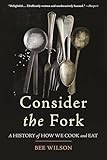
The fork won the way most cultural shifts win: gradually, then suddenly, through the slow accumulation of social pressure from above. Once the aristocracy adopted it seriously in France by the seventeenth century and in England by the eighteenth, the middle classes followed, as they always do, by imitation. The fork became a marker of status precisely because it had once been a marker of foreignness. To use a fork was to signal that you had moved beyond the merely functional, that your table was a place of civilisation. By the nineteenth century, the fork was not just acceptable. It was mandatory. The Victorian era produced the most elaborate fork taxonomy in human history: fish forks, salad forks, dessert forks, oyster forks, pastry forks. A place setting at a formal dinner could contain six or seven forks of different sizes and profiles, each with a specific and non-negotiable purpose. The Church had long since stopped weighing in. The object that was once called sinful became the baseline of civilised eating in under four hundred years. Which raises a question worth sitting with: how many things we consider obviously correct today will look equally arbitrary to whoever comes after us? Every dish has a past. I am just following the trail. Jean-LouisEvery dish has a past. These books will take you further into it.


Sources
- Smithsonian Magazine. A Brief History of the Fork.
- BBC Culture. The extraordinary story of how the fork was invented.
- History Today. Consider the Fork.
- Mental Floss. The Sinful History of the Fork.
- World History Encyclopedia. The History of the Fork.
Disclosure: This article may contain affiliate links. This means we may earn a commission if you click on a link and make a purchase at no extra cost to you. This applies to featured Amazon products or any other Beestrot's partners. Thank you for your support! Jean Louis.