Last Updated on October 9, 2026 by Jean Louis
The British and their tea. It is practically a constitutional arrangement. The kettle goes on at moments of crisis, comfort, greeting, and farewell. It is the most English thing imaginable, and it is almost entirely borrowed.
For most of English history, tea did not exist in the national cup. Beer was breakfast. Wine was celebration. Tea was a rumour from the East that merchants occasionally mentioned. The transformation happened in a single decade, driven almost entirely by one woman who arrived in England in 1662 and brought her habits with her. The question is why nobody remembers her name.
What Catherine Brought in Her Luggage
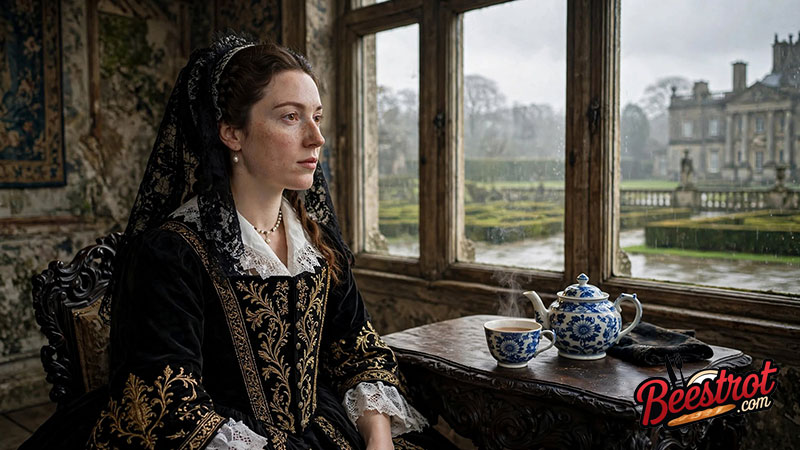
When Catherine of Braganza sailed from Lisbon to marry King Charles II, she packed tea. Not as an exotic curiosity, not as a gift, but as a daily necessity she could not imagine living without. Portugal had established trade routes with China and Japan decades before England had any meaningful presence in Asia. Tea had been part of the Portuguese court for years. For Catherine, it was simply what you drank.
The Portuguese royal court had been drinking tea since the early 1600s, nearly sixty years before it became fashionable in England. Catherine did not introduce tea to Europe. She introduced it to a court that would make it mandatory.
The English court noticed immediately. Charles II’s courtiers were a competitive species, and whatever the queen did, the aristocracy found a reason to do also. Tea became the drink of refinement, of taste, of proximity to royalty. Within a generation, it would become the drink of everyone else too, whether they could afford it or not.
The Drink That Was Already There, Waiting
Tea had arrived in England slightly before Catherine, but it had not caught on. The first recorded sale of tea in England was in 1657, at a coffee house called Garway’s in Exchange Alley, London. It was advertised as a cure for almost everything: headaches, lethargy, bad digestion, poor memory. Nobody bought it with any enthusiasm. Coffee houses were booming. Tea was a curiosity on a shelf.
Thomas Garway’s 1660 broadsheet listed tea’s benefits with the confidence of a man who had never met a sceptic: it maketh the body active and lusty, it helpeth the headache, giddiness and heaviness thereof, it removeth the obstructions of the spleen. Sales were modest.
What tea needed was not a health claim. It needed social permission. It needed someone at the top of the hierarchy to make it the correct thing to drink, so that everyone below could follow without embarrassment. Catherine of Braganza provided exactly that, without planning to, simply by being herself in her new country.
How a Queen’s Habit Became a Nation’s Identity
The mechanics of fashion in the 17th century were not complicated. The aristocracy watched the monarch. The merchant class watched the aristocracy. The shopkeepers watched the merchant class. A habit that began in the Queen’s private chamber could reach a tradesman’s kitchen within two decades. Tea moved exactly this way, but faster than most things did, because it had commerce behind it.
The East India Company, already operating in Asia, recognised the opportunity immediately. If the English court drank tea, the English would want tea. They began shipping it in volume, which dropped the price, which expanded the market, which justified more shipping. By 1700, tea imports to England had grown from a few hundred pounds weight to hundreds of thousands. The feedback loop, once started, did not stop.
By the mid-18th century, the average English family spent more on tea than on any other grocery item. A drink that had not existed in the English diet eighty years earlier had become something people went without food to afford.
The Part Nobody Tells You
What is striking about Catherine’s role is how completely it was erased from the popular version of the story. The British mythology of tea does not include a Portuguese Catholic queen. It includes the East India Company, the Boston Tea Party, the Raj, the factory break, the builder’s brew. These are real. But they come after Catherine. She is the reason any of them are about tea at all.
Part of the erasure may be political. Catherine was Catholic in a Protestant country, Portuguese at a time when England was building its own imperial identity, and a woman at a court that preferred to attribute influence to institutions rather than individuals. She was also, by most accounts, not particularly happy in England. Charles was unfaithful, publicly and without apology. She outlived him, returned to Lisbon, and eventually became regent of Portugal. England kept the tea and forgot who brought it.
The next time the kettle goes on, consider what it actually represents: a Portuguese woman’s daily habit, transplanted into English soil, and grown into something the English now consider entirely their own. That is not unusual in food history. That is food history.
Every dish has a past. I am just following it back to the beginning.
Jean Louis
Sources:
History Is Now: Catherine of Braganza and Tea
The Collector: Catherine of Braganza, the Queen Who Brought Tea to England
UK Tea & Infusions Association: Catherine of Braganza
For All the Tea in China, Sarah Rose
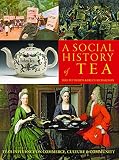
A Social History of Tea, Pettigrew & Richardson
Every dish has a past. These books will take you further into it.
As an Amazon Associate, Beestrot earns from qualifying purchases.