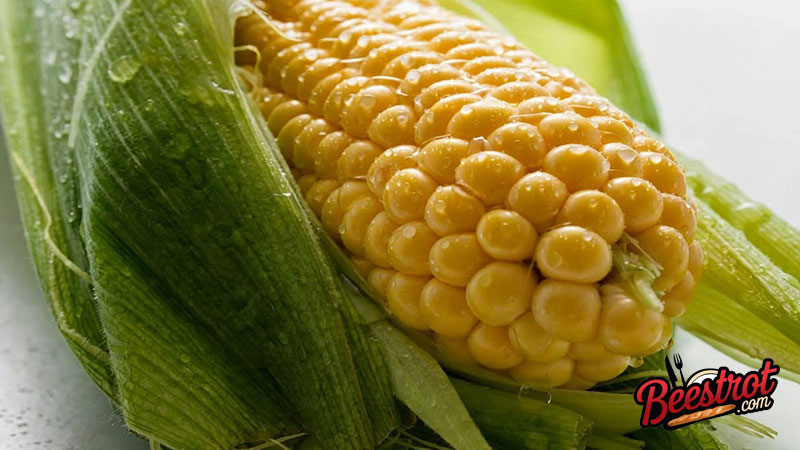
The plant does not exist in the wild. There is no forest in Mexico, no valley in Guatemala, no untouched stretch of tropical grassland where you will find maize growing on its own. The ear of corn you buy at a market, the kernels arranged in tight rows up a cob, the whole structure of it, is a human construction. It was built over approximately 9,000 years by farmers in what is now Mexico, through a process of selection so gradual that no single generation of farmers could have known they were doing it. The result is a plant so thoroughly domesticated that it cannot reproduce without human assistance. If humans disappeared from Earth, maize would follow within a generation. The plant that feeds more people than any other crop cannot survive on its own.
The Plant That Should Not Exist
The closest living relative of maize is a grass called teosinte, specifically a subspecies known as Balsas teosinte, found in river valleys in the Mexican state of Guerrero. When early botanists encountered it, they did not believe the two plants were related. Teosinte grows as a branching weed, roughly knee-high, with long narrow leaves and seed structures so small they border on invisible. Where a maize cob carries hundreds of kernels in tight rows, a teosinte plant produces structures containing between five and twelve seeds, each one locked inside a hard triangular shell so rigid it can crack a tooth. The seeds are designed to fall off. They scatter to the ground, disperse, germinate on their own. The plant is self-sufficient in a way that maize is not.
The visual comparison is startling. When researchers assembled the first side-by-side photographic comparisons of the two plants in the late twentieth century, they drew the kind of incredulous response that the morphology of teosinte and maize still produces in anyone encountering it for the first time. That the two plants share more than 99 percent of their DNA is a fact that the eye refuses to process. The changes encoded in the remaining genetic fraction reshaped the plant so completely that it functions, looks, and behaves like a different species entirely. The botanists who first described teosinte as unrelated to maize were not making a careless error. They were trusting their eyes.
Betty Fussell, in The Story of Corn, documented the full cultural, agricultural, and culinary history of maize across the Americas, tracing the crop from its origins in Mexico through its spread across the continent and its integration into hundreds of distinct food traditions. Her account of the gap between teosinte and maize captures something the genetic evidence alone does not fully convey: that the people who made this transformation were not scientists working toward a goal they could articulate. They were farmers doing what farmers do, selecting for yield and ease, and the aggregate of their practical decisions across nine thousand years produced something that no individual among them intended and none of them ever lived to see completed. The invention belongs to no one and to everyone who planted a seed and chose the best of what grew.
Nine Thousand Years of Invisible Work
The domestication happened in stages that no contemporary observer would have noticed. Each generation of farmers in the Balsas river valley selected, consciously or not, the plants that produced the most seeds, the seeds that stayed attached longest before falling, the cobs that were easiest to harvest. Over hundreds of generations, those selections compounded. A plant with eight seeds became one with twelve, then twenty, then more. The protective shell around each kernel softened. The structure that held the seeds to the plant strengthened. The branching habit of the wild grass straightened into the single-stalk architecture of the modern crop.

Staub Cast Iron Round Cocotte, 4 Qt
Braises, stews, sourdough, tagines: the French-made cocotte that makes everything taste better. Beautiful enough to go straight from oven to table.
View on AmazonArchaeological evidence traces the process through layers of excavated corn remains in Mexican caves. Cobs from sites dated to around 7,000 years before the present measure roughly three to four centimetres long, bearing a few dozen seeds. By 4,000 years ago, the cobs in the same sites are recognizably modern. The transition is visible in the physical record, one excavation layer at a time, without any single moment where a human decided to invent the crop. The invention happened across hundreds of human lifetimes, by thousands of people who never knew the word domestication and would have had no reason to believe they were changing anything beyond next season’s harvest. What they were actually doing was building the most consequential food plant in human history.
Michael Owen Jones, in Corn: A Global History, traced the crop’s movement out of Mexico across North and South America and eventually across the Atlantic, examining how maize adapted to radically different climates, soils, and culinary traditions wherever it arrived. His account of the speed with which the crop was adopted by European, African, and Asian agricultural systems after 1492 reflects something about the plant that the genetic story makes visible: a crop optimized through millennia of human selection is a crop that travels well with humans, because the two have been shaping each other for so long that neither functions as well without the other. The plant that indigenous Mexican farmers built for their conditions turned out to work in conditions no one who built it had ever seen.
What the Genes Remember
The genetic explanation came late. For most of the nineteenth and early twentieth centuries, scientists debated whether maize had descended from teosinte or from a now-extinct wild ancestor, with teosinte as a parallel branch of a shared family tree. The question was not settled until the 1930s and 1940s, when the American geneticist George Beadle began producing hybrid crosses between maize and teosinte. The hybrids were fertile. They produced viable offspring. The two plants were not cousins from a common ancestor. Teosinte was the ancestor. Beadle’s work eventually earned him a Nobel Prize in Physiology or Medicine in 1958, though for discoveries in a different area of genetics. The corn question was the foundation that pointed him in the right direction.
Subsequent research identified a small number of gene changes responsible for the most dramatic differences between the two plants. The gene tb1 governs the branching behavior of the plant. A change in that gene shifts the plant from teosinte’s spreading, multi-stemmed architecture to maize’s upright single stalk. The gene tga1 controls the hardness of the kernel casing. Its modification is what transformed teosinte’s locked, indigestible seeds into the exposed, edible kernels of the modern cob. These changes, and a handful of others, converted a scrubby grass into the most productive and widespread grain crop in human history. The farmers who made those changes did not know what a gene was. They did not need to.
Michael Pollan, in The Omnivore’s Dilemma, described the relationship between maize and the humans who grow it as something closer to a co-evolutionary bargain than a simple agricultural fact: the plant, he argued, has been extraordinarily successful in evolutionary terms precisely because it made itself indispensable to human civilization. By becoming the crop that feeds more people more cheaply than any other, maize secured for itself a kind of protection and propagation no wild plant could achieve on its own. From this angle, the domestication story runs in both directions. Farmers shaped teosinte into maize. Maize, in return, shaped the farmers, the food systems, and the landscapes of the civilisations that grew it. The plant did not survive by accident. It made itself necessary.
A Plant That Cannot Live Without Us
Modern maize cannot seed itself. The kernels are attached to the cob by structures specifically selected over millennia to hold them in place during harvest. When a cob falls to the ground, the kernels do not disperse. They rot together, crowded by competition, unable to germinate successfully. The plant has been optimized for human harvest at the expense of its own reproductive independence. This is not an accident or a flaw in the design. It is the logical outcome of 9,000 years of selection pressure in a single direction: toward the human hand that picks it.
The crop that emerged from that process now covers approximately 197 million hectares of farmland globally. It is the most widely grown grain crop by volume in the world, surpassing wheat and rice. It appears in processed food labels under dozens of technical names, in sweeteners and starches and modified ingredients that most consumers do not recognize as corn at all. The plant that began as a marginal grass in a Mexican river valley, tended season by season by farmers whose names were never recorded and whose faces we cannot imagine, now runs through the global food supply like a structural element. You cannot remove it without taking the system apart. That is not an accident either. That is nine thousand years of work.
Every dish has a past. I am just following it back to the beginning.
Jean Louis


Sources
- Maize, Wikipedia
- Teosinte, Wikipedia
- Domestication of maize, Wikipedia
- George Beadle, Wikipedia
- Balsas teosinte, Wikipedia
More Delicious Reads
Resting Your Meat Is Not Optional. Here Is What Actually Happens If You Skip It.
Cheese Was Discovered by Accident Inside a Dead Animal's Stomach. It Became the Most Traded Food in ...

Top 10 Food and Cooking Movies: A Cinematic Feast for Food Lovers
Olive Oil Has Been Produced for 8,000 Years. The Way It Is Sold Today Would Have Been Considered Fra...
Cinnamon Has Two Completely Different Varieties. One Is Toxic in Large Quantities. Most People Use t...

The Humble Origins of Bistrot: How Small Kitchens Shaped Parisian Dining Culture
Coffee Was Banned in Three Continents at Different Points in History. The Reasons Were Always Politi...
Smoked Paprika and Sweet Paprika Are Not the Same Thing. The Difference Changes Everything.
Fresh vs. Dried Herbs. The Rule Every Professional Cook Knows and Nobody Teaches.