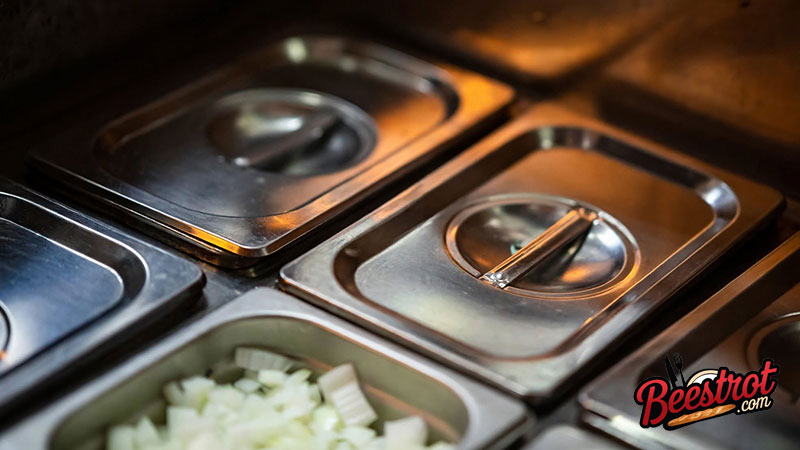
Two hours before service, a professional kitchen is a different kind of quiet. The noise is not absent: there are knives on boards, water running, the low roar of burners being tested. But the quality of the attention in the room is specific. Every cook is working through their mise en place. The vegetables are cut and sorted by container. The stocks are reduced and portioned. The sauces are at the ready. The garnishes are counted. Before a single ticket arrives, the work of the evening is already half done.
This is not organization. Organization is a system for managing things that already exist. Mise en place is something that happens earlier, in the mind, before any object is touched. It is the discipline of thinking through a process completely before beginning it. Professional kitchens inherited it from the brigade system Escoffier codified in the late nineteenth century, but the idea goes further back than that, into the logic of any craft where sequence matters and a mistake under pressure cannot be undone.
The cook who reaches for the salt mid-service and finds it empty has not made a cooking mistake. They made a mise en place mistake. The two are not the same thing.
What the Words Actually Mean
Mise en place translates from French as “put in place” or “everything in its place.” The phrase describes a state: a kitchen where everything a cook will need is ready, positioned, and accounted for before any cooking begins. In professional practice it encompasses far more than the physical arrangement of ingredients. It includes the mental inventory of what will be needed at what moment, the sequencing of tasks by how long each takes, and the identification of what can go wrong before anything does.
Jacques Pépin does not describe mise en place as a technique in Jacques Pépin: New Complete Techniques. He demonstrates it as an assumption, the invisible precondition under which every other technique in the book operates. You learn to julienne a carrot. You are also learning, without being told directly, that the carrot will be julienned before the heat goes on. The recipe tells you what to do. Mise en place is what you do before the recipe starts.
Most home cooks skip the step that comes before the recipe. That skipped step is where most of the difficulty lives.
The Brigade and the Standard
The brigade de cuisine that Escoffier systematized was built on division of labor: each station responsible for its own range, its own prep, its own mise en place. A cook’s station before service was visible to everyone in the kitchen. A poorly set station was evidence of a poorly organized mind, and in a kitchen where every station depended on every other, that kind of failure spread quickly.
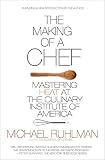
Michael Ruhlman, in The Making of a Chef, describes the way culinary students at the Culinary Institute of America internalize this standard. The mise en place is not graded directly. It shows up in everything else: whether a student can maintain pace, whether they can adjust mid-service without losing composure, whether the work they produce is consistent or erratic. The mise en place is the infrastructure. The cooking is what runs on top of it. Students who struggle with one almost always struggle with the other.
What It Changes in a Home Kitchen
The home cook’s version of mise en place is usually the moment of panic: the onions are softening in the pan, the garlic is ready, and the tin of tomatoes is across the kitchen, still unopened. This is a mise en place failure, not a cooking failure. The remedy is not to cook faster. It is to think earlier.
Samin Nosrat, in Salt, Fat, Acid, Heat, frames cooking as something that happens at the level of understanding before it happens at the level of execution. Her four elements are not a checklist. They are the mental categories through which a cook reads a dish before touching it. That is mise en place applied to flavor: the prior thinking that makes the moment of cooking responsive rather than reactive. The approach is the same whether you are setting out containers of prepped vegetables or building a mental model of what a dish needs before you reach for anything.
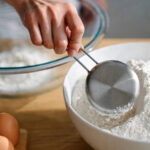
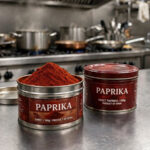
At home, the practice looks simple. Read the recipe through once before starting. Set out every ingredient. Open tins. Measure spices. Bring meat to room temperature. Have your knives where you need them. None of this is revolutionary. What it produces is a different quality of presence at the stove: a cook who is cooking, not also searching, measuring, and catching up.
The Part That Does Not Translate
Professional cooks who have absorbed mise en place over years describe something that goes beyond kitchen efficiency. The habit of thinking through a process before beginning it, of identifying what you need and what could go wrong before either appears, transfers outside the kitchen. It applies to any task that unfolds in sequence, where preparation and execution are separable. The mise en place cook in a home kitchen eventually becomes someone who approaches beginning anything differently.
That is the part the French phrase does not carry into English. “Put in place” is accurate but insufficient. What mise en place describes, fully, is the discipline of not starting until you are ready. In a professional kitchen under service pressure, that discipline is survival. In a home kitchen, it is the difference between cooking and reacting.
The difference between a cook who enjoys cooking and one who merely survives it is usually mise en place. The pleasure is downstream of the preparation.
A recipe is a promise. A technique is the truth behind it.
Jean Louis


Sources
- What Is Mise en Place and Why Is It Important, Serious Eats
- Mise en Place: The Foundation of Professional Cooking, Auguste Escoffier School
- The Life-Changing Magic of Mise en Place, Food52
- Mise en Place in the Professional Kitchen, Fine Dining Lovers
- The Simple Strategy That Changed How I Cook, The Kitchn