Last Updated on October 12, 2026 by Jean Louis
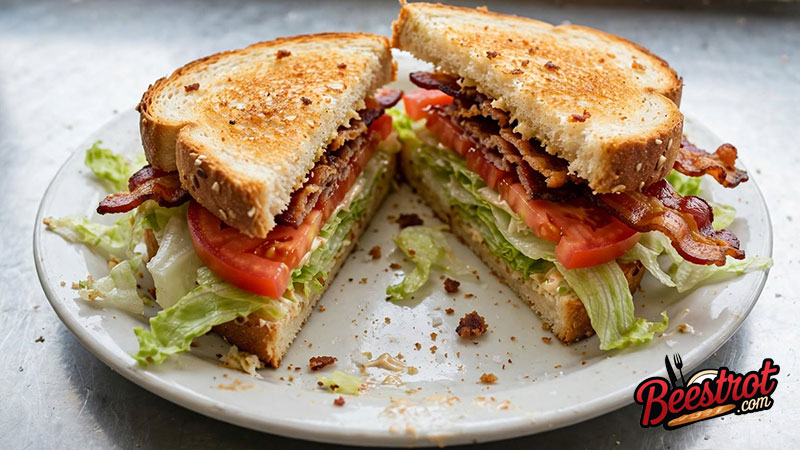
The BLT is one of the most ordered sandwiches in the English-speaking world. It appears on menus from roadside diners to hotel restaurants. It is considered a classic, which implies it has always existed, which implies it is old. It is not old. The earliest known printed recipe appeared in 1929. The sandwich almost certainly did not exist in its recognisable form before the early twentieth century, and the reason is not cultural. It is agricultural.
Each of the three main ingredients required a separate transformation before it could become a year-round, widely available commodity. Bacon, lettuce, and tomato did not converge on the American lunch counter by accident. They converged because three different industries, in three different decades, solved three different problems at roughly the same time.
The Tomato Problem
For most of American history, the tomato was a seasonal local crop. It ripened in summer, it rotted quickly, and it did not travel. A fresh tomato in January in a northern city was either a luxury import or simply not available. The canned tomato existed from the mid-nineteenth century, but a canned tomato does not make a BLT. The sandwich requires a fresh slice, with structural integrity, that holds its shape between bread without collapsing into liquid.
The refrigerated rail car, developed in the 1880s and refined through the 1890s and 1900s, changed what fresh produce could reach which cities in which seasons. Florida and California growers could now ship tomatoes north and east during months when local crops were dormant. By the 1910s, fresh tomatoes were becoming a year-round grocery item in American cities for the first time.
The variety of tomato also mattered. Early commercial tomatoes were bred for flavor, which meant thin skins and high water content. They could not survive long-distance shipping. The development of firmer, thicker-skinned commercial varieties specifically designed to travel, beginning in earnest in the early twentieth century, produced a tomato that could be sliced and placed on bread without immediately making it soggy. The BLT tomato is not a particularly good tomato by flavor standards. It is an excellent tomato by logistics standards.
The Bacon Problem
Pork has been cured and salted for centuries. But the bacon that goes into a BLT is a specific product: thin-sliced, consistently cut, reliably available, and produced at industrial scale. This required the industrialisation of hog farming and meat processing, which in America accelerated dramatically after the Civil War and reached a kind of completion with the rise of the Chicago meatpacking industry in the 1880s and 1890s.
The development of mechanical slicing, combined with refrigerated transport and standardised curing methods, meant that by the 1910s a cook in almost any American city could buy bacon that was uniform in thickness, reliable in saltiness, and predictable in how it would cook. Before this standardisation, bacon was a farmhouse product with enormous variation. After it, bacon was an industrial product with a consistent identity.
The specific appeal of bacon in a sandwich is its combination of fat, salt, and crunch. That crunch depends on the bacon being sliced thin enough to crisp without burning before the fat renders. Achieving that consistently, at scale, across millions of households and diners, required the industrial bacon supply chain that simply did not exist before the late nineteenth century.
The Lettuce Problem
Lettuce is the ingredient people think least about, which makes it the most interesting case. Iceberg lettuce, the variety that goes into virtually every classic BLT, was developed specifically to solve a shipping problem. Earlier lettuce varieties wilted rapidly after harvest. They could not survive more than a day or two in transit. This meant lettuce was, like the early tomato, a local seasonal crop.
Iceberg lettuce was selected and bred for its ability to survive refrigerated rail transport across the continental United States. Its tight, dense head retains moisture and resists wilting for days rather than hours. It was being shipped from California to eastern markets by the early 1920s, packed in ice, in quantities that made it the first nationally available fresh salad green in American history.
The name came from the ice used to pack it for shipping. The lettuce arrived at its destination looking as if it had been pulled from the ground that morning. It had not. It had travelled three thousand miles over several days. The technology that made this possible was the same refrigerated rail infrastructure that had transformed the tomato supply a decade or two earlier.
When All Three Were Ready
By the early 1920s, for the first time in American history, a diner or lunch counter in New York, Chicago, or Boston could reliably obtain fresh sliced tomatoes, crisp-cut bacon, and iceberg lettuce on the same day in the same month regardless of season. The white sandwich bread that holds the BLT together had been industrially produced since the late nineteenth century. Mayonnaise had been commercially available since the 1900s. The infrastructure for the sandwich was complete.
The 1929 printed recipe is almost certainly not the moment of invention. The BLT was probably assembled informally in lunch counters and tea rooms through the early and middle 1920s before anyone thought to write it down. But 1929 is when it entered the record, and the record requires that all three agricultural revolutions had already happened.
Three ingredients. Three supply chains. Three separate decades of development. The result is the most ordered sandwich in the English-speaking world, which most people assume has been around forever.
It has not. It is younger than commercial aviation.
Every dish has a past. These books will take you further into it.
Jean Louis