The Michelin star is the most famous award in professional cooking. Chefs build careers chasing it. Some have wept when they received it. Some have returned their stars rather than live under the pressure of keeping them. At least one chef is widely believed to have died by suicide after losing one (Bernard Loiseau – RIP). It is, by any measure, the most consequential piece of restaurant criticism in existence.
It was invented to sell tyres.
The brothers Andre and Edouard Michelin ran a rubber company in Clermont-Ferrand, France. In 1900, there were approximately 3,000 cars in the entire country. The Michelin brothers understood, with remarkable clarity, that their future depended on more people driving more cars more miles. More miles meant more tyre wear. More tyre wear meant more sales. The question was how to get people driving further than they needed to go.
The Guide Was a Marketing Tool
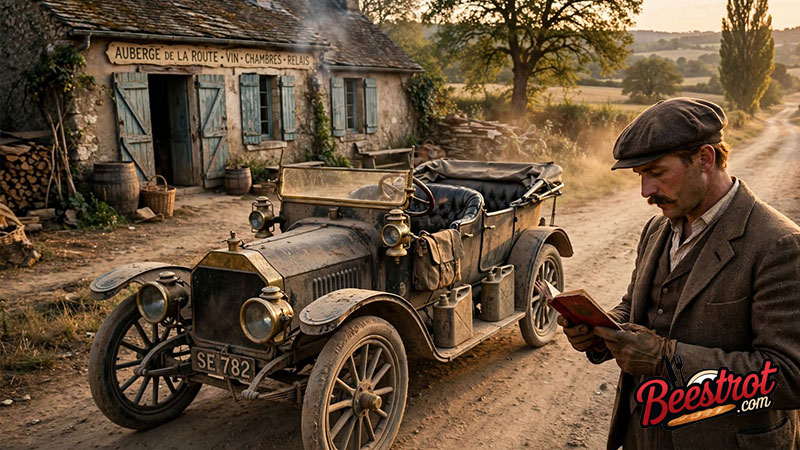
The first Michelin Guide was published in 1900 and given away free to motorists. It was a practical handbook: maps, petrol stations, tyre repair shops, and, almost as an afterthought, places to eat and sleep along the road. The logic was simple. If drivers knew where to find a good meal two hours away, they might actually drive two hours away. If there was a reason to make a journey, the journey would be made. And journeys wore out tyres.
Andre Michelin was reported to have said, on seeing copies of the guide being used to prop up a workbench in a garage: Man only truly respects what he pays for. In 1920, Michelin began charging for the guide. It sold 100,000 copies in the first year.
The restaurant listings became more serious over the following decade. In 1926, the guide began awarding a single star to restaurants worth a special journey. By 1931, the system had expanded to three tiers: one star for a very good restaurant, two stars for excellent cooking worth a detour, three stars for exceptional cuisine worth a special journey. The language of those three categories has barely changed in nearly a hundred years. Neither has the fundamental purpose: to give drivers a reason to go somewhere they had not planned to go.
What the Brothers Did Not Care About
Andre and Edouard Michelin were not food critics. They were not gourmets in any documented sense. They did not attend the restaurants they rated, at least not in any capacity related to the guide. The early inspectors were anonymous employees of the company, travelling the roads of France on the same routes that a motorist might take, eating in the restaurants that happened to be along the way, and reporting back on whether the food was worth stopping for.
The anonymity of the inspector was not a journalistic principle in origin. It was a commercial one. A tyre company sending employees to review restaurants did not want those employees to be recognised as tyre company employees. The mystique of the anonymous Michelin inspector, which became one of the most romanticised features of the guide, began as a way to avoid an awkward conversation about who was paying for dinner.
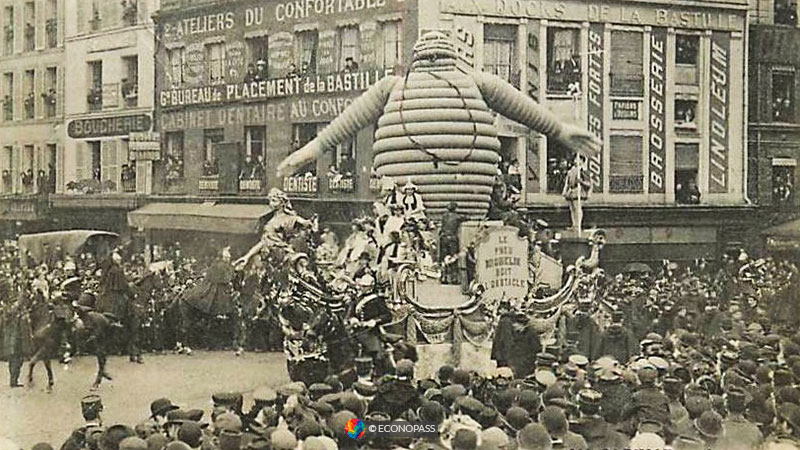
Michelin Bibendum, Paris 1908
The Consequence Nobody Planned For
What Michelin created, without intending to, was a system powerful enough to define an entire industry. Chefs who receive three stars can charge what they choose and fill every table regardless. Chefs who lose a star have seen their restaurants empty within weeks. The guide became the arbiter of culinary excellence not because a rubber company set out to define culinary excellence, but because the market decided that a consistent, anonymous, rigorous rating system was exactly what it had been missing.
There is something clarifying about knowing the origin. The Michelin star did not emerge from a tradition of gastronomy or a philosophy of dining. It emerged from a spreadsheet calculation about tyre sales and road miles. The fact that it became the most respected culinary award in the world is either a triumph of unintended consequences or the most successful marketing campaign in the history of food, depending on how you choose to look at it. Either way, the next time you see a Michelin star on a restaurant window, you are looking at rubber.
Every dish has a past. I am just following it back to the beginning. Jean Louis
Disclosure: This article may contain affiliate links. This means we may earn a commission if you click on a link and make a purchase at no extra cost to you. This applies to featured Amazon products or any other Beestrot's partners. Thank you for your support! Jean Louis.
FediBack: The Michelin Star Was Invented to Sell Tyres. The Brothers Had No Interest in Food.
🟢 The first Michelin Guide was published in 1900 and given away free. Andre Michelin reportedly said "man only truly respects what he pays for" after seeing copies used to prop up a workbench in a garage. In 1920 they started charging for it. It sold 100,000 copies in the first
🟢 The first Michelin Guide was published in 1900 and given away free. Andre Michelin reportedly said "man only truly respects what he pays for" after seeing copies used to prop up a workbench in a garage. In 1920 they started charging for it. It sold 100,000 copies in the first
These articles and stories are free because of a few ads. To support us, simply turn off your ad blocker for Beestrot. It takes one click on the ad blocker icon in your browser. Thank you!
We use cookies to ensure that we give you the best experience on Beestrot.com. If you continue to use this site we will assume that you are happy with it.