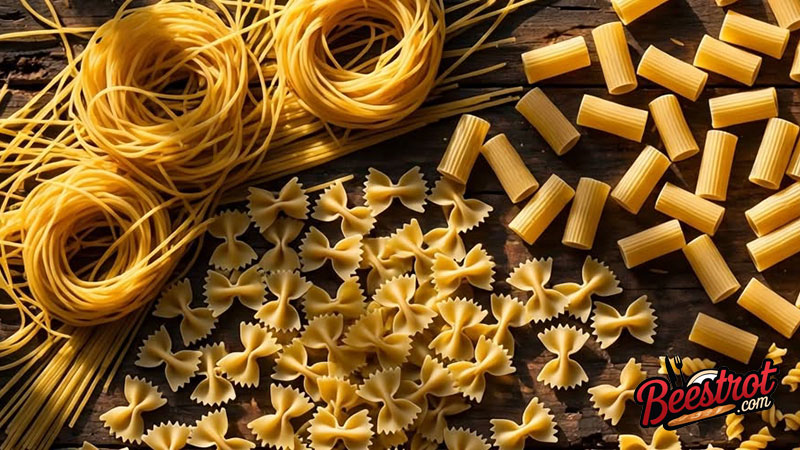
Last Updated on October 2, 2026 by Jean Louis
The story goes like this: Marco Polo returned from China in 1295, having spent seventeen years at the court of Kublai Khan. In his luggage, along with silks and spices, he carried the idea of noodles. He brought it to Italy. Italy turned it into pasta. The rest is dinner.
It is a good story. It is also complete fiction. And here is the part that should make you genuinely angry: it was invented in 1929 by an American pasta industry trade journal called the Macaroni Journal, for marketing purposes.
Not an old legend. Not a historical misunderstanding. An advertisement. Less than a century old. And it became, somehow, the most widely repeated origin story in the history of Italian food.
Food historians have known this story is false since the 1930s. The evidence against it is not ambiguous. In 1154, the Arab geographer al-Idrisi, writing in Sicily for the Norman King Roger II, described dry pasta being manufactured on the island and exported to Muslim and Christian markets across the Mediterranean. He called it itriyya, dried string pasta, and noted it was produced in significant commercial quantities. This is 1154. Marco Polo did not leave for China until 1271. The pasta was already there, already being exported, already a commercial product, 117 years before he set sail.
Italian texts from the 1270s and 1280s, the very decades when Marco Polo was somewhere in Asia, mention maccheroni and vermicelli by name. These are familiar pasta shapes, documented in Italian sources, while Marco Polo was still abroad. When he returned in 1295 describing Chinese noodles as being “like lagana,” he used an Italian word for a pasta-like food. The implication was not that he was discovering something new. It was that he was comparing something unfamiliar to something he already knew from home.
But here is where it gets more interesting. How did pasta actually get to Sicily?
The Arab conquest of Sicily began in 827 CE and was completed by 902. For roughly two centuries, Sicily was an Islamic emirate, and the culinary influence of that occupation left marks that Italian cooking has never entirely erased. The Arabs brought durum wheat, sugar, citrus fruits, aubergine, and, according to the best available historical evidence, dried pasta. The word itriyya that al-Idrisi used is Arabic. Its Sicilian derivative is tria, still used in some parts of southern Italy to describe a type of pasta. The etymology is a paper trail that leads directly to the Arab kitchen, not to China and not to Marco Polo.
The Chinese connection is not entirely invented, but it is not the Italian connection. China has its own independent noodle tradition, documented as far back as 4,000 years ago. In 2005, archaeologists excavating a flood site in northwestern China found a sealed clay bowl containing the oldest preserved noodles ever discovered, made from millet, dating to around 2000 BCE. Chinese noodles are ancient, real, and genuinely impressive. They are simply not the ancestor of Italian pasta. Two civilisations independently developed the idea of mixing grain flour with water and stretching it into shapes. This happens with technologies too. It happens with foods.
The Marco Polo myth is particularly stubborn because it has a narrative logic that feels satisfying. A traveller goes to a far-off place, sees something extraordinary, and brings it home. That is how cultural exchange works in the popular imagination. The reality of how pasta reached Italy, through centuries of Arab agricultural and culinary influence on a Mediterranean island, through trade routes and conquest and slow cultural absorption, is more complicated, less dramatic, and considerably more historically accurate.
I find the real story more interesting, not less. The Arabs who occupied Sicily for two hundred years left behind not just their language traces and their architecture but the thing that would eventually become one of the most recognisable foods in the world. Every plate of spaghetti alle vongole, every bowl of rigatoni al ragu, every strand of tagliatelle contains, if you follow the thread back far enough, a connection to a medieval Islamic kitchen on a Mediterranean island. That is a better story than a Venetian merchant with a suitcase full of noodles.
The Macaroni Journal article from 1929 was trying to sell pasta to Americans by connecting it to a famous explorer. It worked spectacularly well. The story spread, repeated in cookbooks and documentaries and dinner table conversations, and Marco Polo’s luggage became one of the great phantom objects of culinary history.
He never carried noodles home. The pasta was already there.
The kitchen never lies. History sometimes does.
Jean Louis
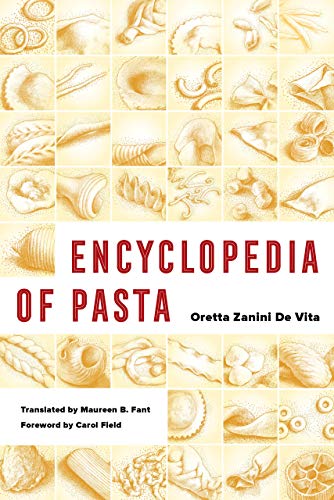
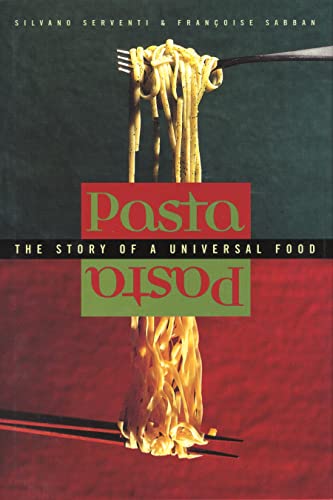
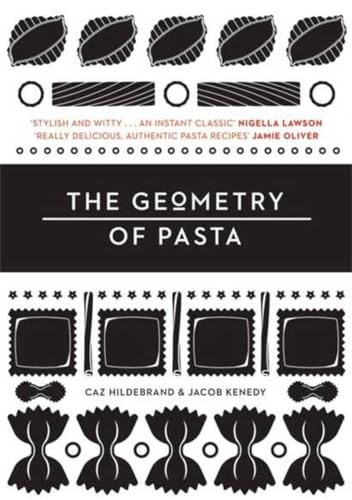
Every dish has a past. These books will take you further into it.
Sources
- Italy Planner. The Most Famous Italian Food Origin Myths. 1929 Macaroni Journal invention, al-Idrisi 1154 reference, primary source analysis.
- Eats History. The Real Origin of Pasta. Arab itriyya, Sicily conquest, durum wheat, documented timeline.
- Culinary Lore. Marco Polo and Chinese Pasta. Polo’s own writings, lagana reference, Italian texts predating his return.