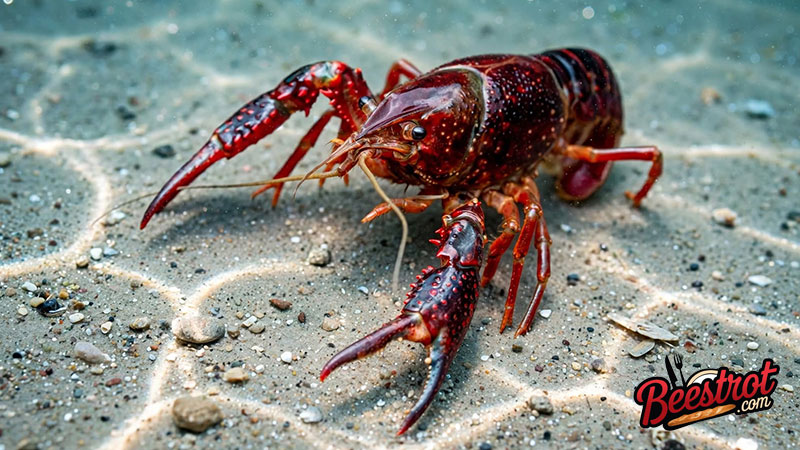
In the winter of 1622, the Pilgrim settlement at Plymouth Colony was struggling. Food was short, the harvest had not gone as hoped, and the colonists were embarrassed by what they had to offer new arrivals from England. What they could provide in reasonable quantity was lobster. They served it. They apologized for it. The letter describing this moment survives. The apology was genuine.
This was not an unusual reaction. Along the coasts of New England, lobster was not food in any aspirational sense. It was what the ocean left behind when it had nothing better to give. It washed ashore in piles reported to be two feet deep in places, so dense and so reliably present that farmers collected it by the cartload and plowed it into their fields as fertilizer. It fed the soil. It was used as bait. It was not, by the standards of the time, something you cooked for a guest you wanted to impress.
The colonial American lobster was not the creature on a restaurant menu today. Historical records suggest they reached lengths of up to five feet. The aggressive overfishing that reduced their size had not yet begun. The sea was full of them, and nobody thought that was a good thing.
Jean Louis has spent years following food history back to its sources, and few stories in that history are as cleanly inverted as this one. The lobster offers an almost perfect case study in how price creates perception, and how perception creates price, and how the two can spin in opposite directions from any point in time.
What the Poorhouses Served
The documented record of lobster as institutional food in colonial and early American history is not ambiguous. Prisons served it. Poorhouses served it. It was the ration of people who had no power to refuse it, in institutions that had no reason to offer anything better. The cost was near zero. The supply was reliable. The nutritional value was adequate. For the purposes of feeding large numbers of people cheaply, it was close to ideal.

Staub Cast Iron Round Cocotte, 4 Qt
Braises, stews, sourdough, tagines: the French-made cocotte that makes everything taste better. Beautiful enough to go straight from oven to table.
View on AmazonWhat made it additionally useful, from the perspective of whoever was writing the food budget, was precisely what made it humiliating for the people eating it. Lobster was coastal poverty food. Everyone knew what it signified. Receiving it meant something about your position in the world, and that meaning was not favorable. The institution knew this. The prisoners knew this. It was served anyway.
The servant class in colonial New England knew the lobster problem well enough to push back against it in writing. Indenture agreements between servants and employers in Massachusetts included clauses limiting how frequently lobster could appear on the table. The specific figure that appears in food history accounts is three times per week as the ceiling. Beyond that limit, the servant had contractual grounds to object.
This detail from colonial America has circulated through food history for long enough that it sometimes arrives softened or distorted. The clearest version of the record is this: it was not a formal legislative act in the modern sense. It was a private contractual protection, written into indenture agreements because servants understood their position well enough to negotiate against the worst of what their employers might feed them. Lobster was specifically identified as a food that required a cap. That identification tells you everything about where it stood in the culinary hierarchy of the time.
The Geography of the Change
The transformation did not happen all at once, and it did not happen everywhere at the same time. What made the lobster’s status reversible was not any change in the lobster itself. It was canned food and the railroad.
The canned food industry developed in the early nineteenth century. By the 1840s, canned lobster was moving in volume from the Maine coast to cities that had never smelled the tide. The buyers in those cities had no memory of the shoreline piles, no association with the poorhouse ration, no inherited contempt for the creature in the tin. They ate it because it was available and interesting and unlike anything they had grown up eating. They liked it. They told other people about it.
Rail transport compounded what canning started. By the second half of the nineteenth century, live lobsters were being shipped inland in tanks, arriving at restaurants and hotels in cities far from the coast. The urban diner had no context for colonial food associations. The lobster arrived without its history. The price rose accordingly.
By the early twentieth century, the inversion was largely complete. The price that lobster commanded in a Boston or New York restaurant had moved so far from its colonial coastal valuation that the original context had effectively vanished. The poorhouse ration had become the anniversary dinner. The fertilizer ingredient was now the dish that required a bib and a small fork and a price that made you think twice.
What Stayed the Same
The lobster did not change. The ocean produced the same creature in the same waters, with the same taste and the same difficulty of extraction from the shell. What changed was the layer of meaning that accumulated around it, and then the layer that replaced that layer, and then the price that the second layer could command once the first was forgotten.
Food history turns on this kind of reversal more often than most people expect. The associations that make a food luxurious or commonplace are rarely built on anything intrinsic to the food itself. They are built on scarcity, geography, timing, and the selective memory of whoever is writing the menu. Lobster happened to be caught at both ends of that cycle within a few centuries, which is fast enough for the contrast to be uncomfortable if you think about it too carefully.
The servants who negotiated their three-times-per-week cap would not have predicted the anniversary dinner. They were trying to get through the week with something other than lobster on four of its days. The cap felt like a reasonable protection against an indignity. It has since become a footnote in culinary history that most people learn about in the context of a restaurant they are about to spend serious money in.
The lobster on the menu is the same lobster. The price is the whole story.
Every dish has a past. I am just following it back to the beginning.
Jean Louis
Sources
- Wikipedia, Lobster
- Maine Legislative History Archives
- Wikipedia, History of the Canning Industry in the United States
- Smithsonian Magazine, When Lobster Was Considered the Cockroach of the Sea
- Atlas Obscura, When Lobster Was Prison Food
More Delicious Reads

Saffron Is the Most Expensive Spice in the World. Here Is Why It Is Worth Every Cent.
Béarnaise Sauce Was Born From a Mistake During a Restaurant Service. The Chef Sent It Out Anyway. It...
The Spice Trade Killed More People Than Most Wars. Nutmeg Was the Reason the Dutch Massacred an Enti...
Peanut Butter Was Patented Before Americans Had Learned to Like Peanuts. The Man Behind It Was Not W...
Mayonnaise Was Almost Certainly Invented During a Military Siege. No Kitchen Was Involved.
Pizza Was Peasant Food Eaten With the Hands in the Street. The Version the World Loves Was Invented ...

You Have Been Storing Your Spices Wrong. Here Is What a Chef Actually Does.
Why Bakery Bread Cannot Be Replicated at Home. And the One Thing You Can Do About It.
Resting Your Meat Is Not Optional. Here Is What Actually Happens If You Skip It.