Last Updated on October 7, 2026 by Jean Louis
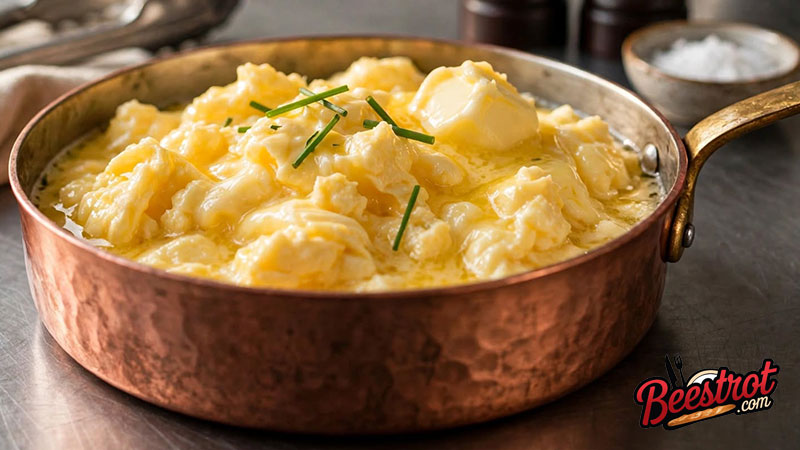
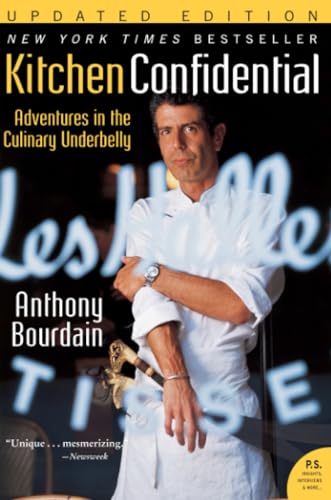
Anthony Bourdain said it first and said it best, which is why anyone who has read Kitchen Confidential has been slightly suspicious of restaurant food ever since. “Good food, good eating, is all about blood and organs, cruelty and decay,” he wrote, but the line that actually changed how people thought about restaurant cooking was simpler: butter. The answer to why restaurant food tastes better than home cooking is almost always butter. More of it than you imagine. More of it than the recipe says. More of it than feels reasonable to a person who is trying to live a normal life.
He was not exaggerating. And it is not an accident.
A professional kitchen operates on a logic that is completely different from a home kitchen, and one of the central differences is the relationship with fat. At home, butter is an ingredient. In a restaurant, butter is a technique. It is used to start a sauce, to finish a sauce, to baste a piece of meat while it cooks, to enrich a vegetable dish at the last moment, to mount a pan sauce after the protein comes out, to add gloss and body to anything that looks flat or thin. The technical term for the final addition of cold butter to a hot sauce to give it richness, shine and body is monter au beurre. It is one of the most fundamental techniques in French cooking, and it accounts for more of the difference between restaurant food and home cooking than almost any other single practice.
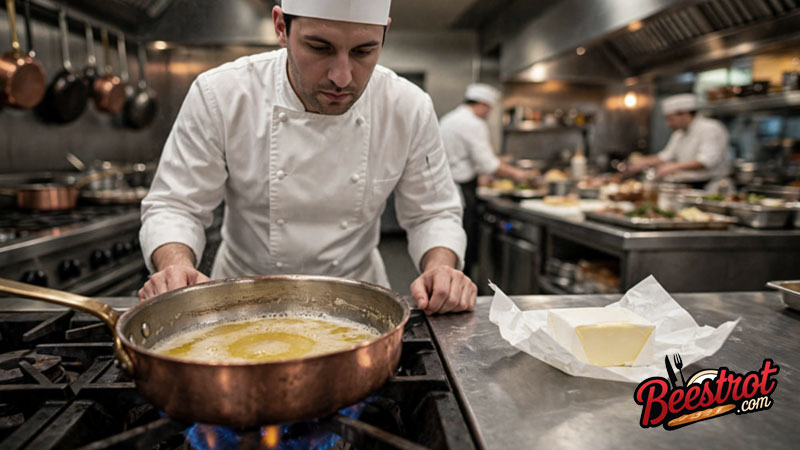
The mechanics of “monter au beurre” are simple. You take a hot sauce that is nearly finished, remove it from direct heat, and whisk in small pieces of very cold butter one at a time, letting each piece emulsify into the sauce before adding the next. The cold butter and the hot liquid create an emulsion: the milk fat disperses through the sauce as tiny droplets, coating the tongue and creating a sensation of richness and smoothness that no other ingredient replicates. The sauce becomes glossy. It clings to the back of a spoon. It has what French chefs call napper, the ability to coat. You taste this in every restaurant that knows what it is doing. You do not taste it at home because home recipes do not include it, and home cooks do not know to add it.
Why do restaurant recipes not include it when they publish their dishes in cookbooks? Several reasons, and none of them are conspiracy. The first is that the amounts involved would alarm most home cooks. A sauce that serves four in a restaurant might finish with sixty to eighty grams of cold butter whisked in at the end. A recipe that honestly listed this would cause readers to put the book down. The second reason is that home cooks often cannot replicate the temperature control that monter au beurre requires. If the sauce is too hot when you add the butter, it breaks. If the butter is not cold enough, it breaks. Professional kitchens have the equipment and the instinct to manage this. Home kitchens require practice.
The butter at the start of cooking is equally important and equally underestimated. When a chef sweats shallots or onions for a sauce base, they use more butter than any written recipe suggests, because they understand that the shallots need to cook gently in enough fat to soften completely and become sweet without colouring. A tablespoon is usually not enough. Two tablespoons is closer. And when those shallots have softened and the wine goes in and reduces and the stock follows and reduces again, the foundation of the sauce has been built in butter from the start, and the monter au beurre at the finish simply completes what was always a buttered dish dressed up as something more complicated. The complexity comes from technique. The richness comes from butter, the whole way through.
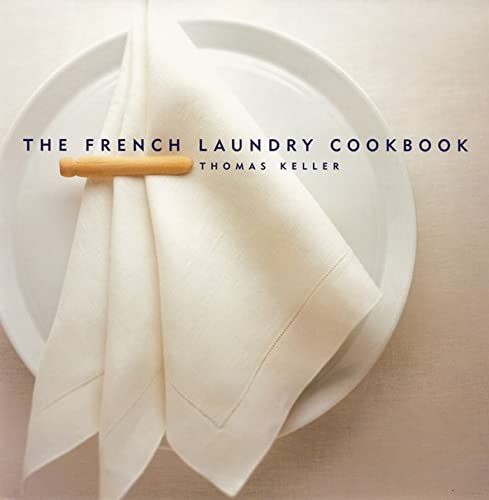
Thomas Keller, whose restaurant The French Laundry has been considered one of the finest in the world, has described butter as the single most important ingredient in his kitchen. Not as a luxury, not as an indulgence, but as the fundamental medium through which flavour is built, carried and finished. His cookbook does not hide this. The quantities are listed honestly and they are genuinely surprising. But most home cooks who buy the book cook the recipes with half the butter indicated, because they are cooking for health or economy or simply because the quantity seems implausible, and then they wonder why the result is good but not quite the same.
The same applies to restaurant vegetables. A bowl of green beans or asparagus in a good restaurant has almost certainly been finished in butter after cooking, tossed in the pan until coated and glossy, perhaps with a little of the cooking water to help emulsify. This is not visible on the plate. It is not mentioned on the menu. The vegetable tastes intensely of itself and has a sheen that home-cooked vegetables rarely achieve, and the reason is two tablespoons of butter added at the last moment and shaken through quickly over high heat.
I am not telling you to cook this way every day. I cook with less butter at home than I used in professional kitchens, because I am not cooking for people who have chosen to spend money on a restaurant experience, and because daily life requires different choices than service. But I am telling you that when your restaurant meal tastes better than your home cooking, and you cannot identify exactly why, this is almost always the variable. The dish you ate was built in butter from the first shallot to the last drop of sauce. The version you make at home was built with a more cautious hand. Both are valid. Only one of them tastes like the restaurant.
Next time you want to understand the gap, finish your pan sauce with a cold knob of butter whisked in off the heat. Do it before you plate. Watch what happens to the sauce. Taste it before and after.
Then you will know. And you will never look at a menu the same way again.
The kitchen never lies. History sometimes does.
Jean Louis
Want to cook like a professional? These books will close the gap.

Sources
- Serious Eats. The Key to Restaurant-Quality Pan Sauces Is Butter. Monter au beurre technique, emulsification, temperature control.
- Bon Appetit. Why Restaurant Food Tastes Better. Butter quantities, finishing techniques, professional kitchen practices.
- The Kitchn. The French Technique That Makes Restaurant Sauces So Good. Monter au beurre step by step, napper, cold butter emulsion.