The jar on the shelf says cinnamon. What it probably contains is cassia, which is not the same plant, does not have the same chemical composition, and is not what culinary professionals mean when they reach for cinnamon in a kitchen where precision matters. The confusion is not new and it is not accidental. It is the result of a trade history that allowed a cheaper substitute to inherit the name of the original, and a retail system that has never found a commercial reason to correct the error. Most people buying cinnamon have never tasted real cinnamon. They have tasted something that tastes like what they think cinnamon tastes like, which is a different thing entirely.
True cinnamon is Cinnamomum verum, also called Ceylon cinnamon. The name Ceylon is the colonial name for Sri Lanka, which remains the primary source of the genuine article. The bark is harvested from young branches, the outer layer scraped away, and the thin inner bark dried until it curls into soft, layered rolls that look like a tightly packed cigar made of parchment. The colour is light tan. The texture is delicate enough to grind with a mortar or snap between two fingers. The flavour is mild, slightly sweet, with a faint citrus note underneath. It is not aggressive. It does not announce itself in a dish. It suggests.
What the Label Does Not Say
Cassia cinnamon comes from several related species: Cinnamomum cassia from China, Cinnamomum burmannii from Indonesia, and Cinnamomum loureiroi from Vietnam, which is sold as Saigon cinnamon. All three are significantly more pungent than Ceylon, all three are significantly cheaper to produce, and all three are sold in most supermarkets in Europe and North America under the unqualified word “cinnamon.” In the United States, there is no regulatory requirement that a product labelled cinnamon specify which species it contains. In the European Union, the distinction matters legally, but only in the context of coumarin limits, not in labelling requirements for the spice itself.
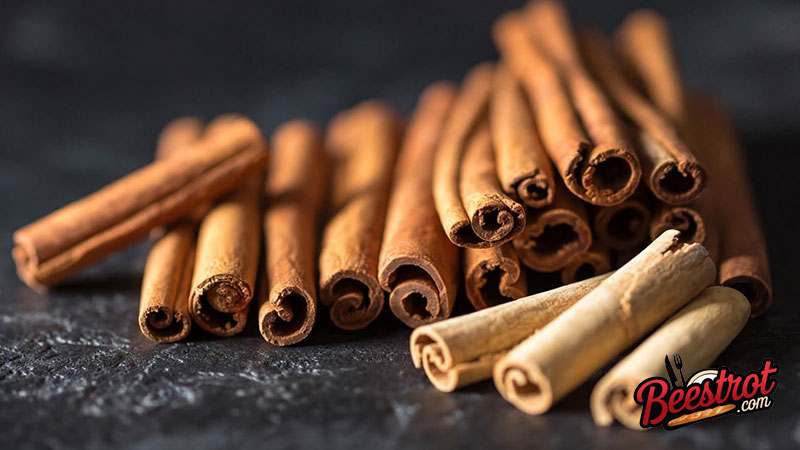
The visual difference is reliable once you know to look for it. A stick of Ceylon cinnamon is composed of multiple thin layers of bark rolled together, soft enough to crumble. A stick of cassia is a single hard curved piece, more like a piece of wood than paper, usually darker brown, with no visible layering. Ground, the distinction becomes harder but not impossible: Ceylon is lighter in colour and finer in texture; cassia is darker and slightly coarser. Most of the ground cinnamon sold in standard supermarkets is cassia or a blend heavily weighted toward cassia. The blend is cheaper to produce and the flavour is stronger, which reads as more cinnamon-like to a consumer whose reference point is cassia.
Jack Turner, in Spice: The History of a Temptation, traces how the spice trade built its entire commercial structure around scarcity, substitution, and the deliberate obscuring of origins, noting that merchants and traders historically had every incentive to prevent consumers from understanding exactly what they were buying or where it came from. Cinnamon is one of the clearest surviving examples of this logic. The substitution of cassia for Ceylon did not happen because the two are indistinguishable. It happened because cassia was available in greater quantity at lower cost, and the market found that consumers could not reliably tell the difference once the product was ground and jarred. The original remained available for those who sought it. Most people did not seek it because they did not know there was anything to seek.

Vitamix E310 Explorian Blender
Silky smooth soups, nut butters, smoothies and sauces. Variable speed, self-cleaning, built for decades of use. The blender serious cooks actually buy.
View on Amazon
Where the Toxicity Comes From
Coumarin is a naturally occurring aromatic compound found in several plants, including tonka beans, sweet woodruff, and cassia cinnamon. It is not present in meaningful quantities in Ceylon cinnamon: the coumarin content of Ceylon is typically measured at around 0.017 milligrams per gram. Cassia cinnamon contains substantially more: depending on the variety and measurement, the figure ranges from roughly 1 milligram per gram in Chinese cassia to 6 to 12 milligrams per gram in Vietnamese Saigon cinnamon. The difference is not marginal. It is a factor of several hundred.
The European Food Safety Authority has established a tolerable daily intake of coumarin at 0.1 milligrams per kilogram of body weight. For an adult weighing 70 kilograms, this represents a daily limit of 7 milligrams. A single teaspoon of Saigon cinnamon can contain 30 milligrams of coumarin. At typical culinary doses, the risk from occasional use is considered low. At the quantities involved in cinnamon supplements, cinnamon-flavoured protein powders, or recipes that use cinnamon as a primary ingredient in multiple servings, the daily intake can exceed the tolerable limit without difficulty. Germany’s Federal Institute for Risk Assessment published guidance specifically on coumarin in cinnamon-flavoured foods after reviewing the available evidence on liver toxicity at higher doses. The concern is not theoretical.
Amy Stewart, in The Drunken Botanist, examines the chemical complexity of plants used in food and drink, returning repeatedly to the point that plants produce their secondary compounds for reasons that have nothing to do with human consumption, and that the same compound that creates a desirable flavour or aroma can, at different concentrations or in different contexts, produce effects its users did not intend. Coumarin in cassia is a precise example of this. The compound contributes to the warm, slightly sweet, faintly medicinal flavour that makes cassia useful in cooking. At the concentrations a teaspoon delivers into a recipe, it functions as flavour. At the concentrations a supplement or a heavily cinnamon-flavoured food programme might deliver across a day, it functions as a toxicological variable. The flavour and the risk come from the same molecule.
How to Tell Them Apart
The simplest test is the stick. If the cinnamon in your kitchen came as a stick and the stick is a solid, hard, single-layered piece of bark that does not flex or crumble, it is cassia. If the stick is composed of multiple thin layers that look laminated together and crumble at the edges, it is Ceylon. Ground cinnamon provides less certainty, but colour is a rough guide: Ceylon is tan to light brown; cassia is a deeper reddish brown. Smell is also informative. Ceylon is delicate and slightly sweet with a faint citrus quality. Cassia is immediately assertive, warm, and spicy in a way that fills the room.
The price is the most reliable signal in a retail context. Ceylon cinnamon costs more than cassia, sometimes significantly more, and a jar of ground cinnamon priced comparably to any other generic supermarket spice is almost certainly cassia. Specialty food stores, health food retailers, and online spice merchants typically stock both and label them accurately. The distinction has become more visible in recent years as the coumarin issue has received coverage, but the default product in most general supermarkets has not changed. What has changed is that the information needed to make a different choice is now easier to find.
Niki Segnit, in The Flavour Thesaurus, maps flavour affinities and distinctions with a precision that reveals how much professional cooking depends on a granular understanding of what a given ingredient actually tastes like, as distinct from what its name suggests it tastes like. Her entries on cinnamon reflect the difference between the two varieties without dwelling on it: Ceylon pairs differently than cassia because it has a different flavour profile, and a cook who treats them as interchangeable is working with two different instruments while believing they have only one. The substitution changes the dish. Most recipes that call for cinnamon were written by people using cassia, which means the dish is calibrated to cassia’s assertiveness. Substituting Ceylon produces a subtler result, which may require adjustment.
What Professionals Actually Use
Professional kitchens and trained pastry chefs tend to know the distinction and stock both deliberately. For applications where cinnamon is a background note, one element in a complex spice blend or a supporting flavour in a braise, cassia’s assertiveness is an asset. It carries further. It persists through long cooking. For applications where cinnamon is a primary flavour and delicacy matters, a custard, a light infusion, a dessert where the cinnamon should be present without dominating, Ceylon performs differently and usually better. The two are not interchangeable. They are two different tools that happen to share a common name.
The practical implication for a home cook is not that cassia should be abandoned. It is that knowing what is in the jar makes it possible to use it deliberately rather than by default. If a recipe calls for cinnamon and the dish tastes too aggressively spiced, the problem may not be quantity. It may be species. If you have been using cassia your entire cooking life and want to understand what the original tastes like, buy a small quantity of Ceylon sticks from a reputable spice merchant and taste them side by side. The difference is not subtle. What is subtle is that you have been told your whole life that the assertive one is the standard. It is not. It is the substitute that became standard because it was cheaper. The original is still there, still available, and still better for the applications it was originally used for.
Every spice carries a world inside it. I am just learning to listen.
Jean Louis


Sources
- Cinnamon, Wikipedia
- Cinnamomum verum, Wikipedia
- Coumarin, Wikipedia
- Cinnamomum cassia, Wikipedia
- Cinnamomum loureiroi (Saigon cinnamon), Wikipedia
More Delicious Reads
Mayonnaise Was Almost Certainly Invented During a Military Siege. No Kitchen Was Involved.
Mise en Place Is Not Organisation. It Is a Philosophy That Changes How You Experience Cooking.
Pizza Was Peasant Food Eaten With the Hands in the Street. The Version the World Loves Was Invented ...
How You Cut Garlic Changes What It Tastes Like. Four Cuts, Four Flavours.
Toasting Spices Is Not Optional. Here Is the Science Behind Why It Matters.
Chilli Peppers Did Not Exist in Asian Cooking Until 500 Years Ago. Now They Define It.

The Industry Convinced You Breakfast Is the Most Important Meal of the Day. It Was an Ad Campaign.

The Best Ingredient I Ever Added to My Kitchen Had Nothing to Do with Food
The Pretzel Was Invented by a Monk as a Reward for Children Who Learned Their Prayers. The Shape Is ...