Last Updated on October 4, 2026 by Jean Louis
If you have ever eaten at a good restaurant and wondered why everything tastes more alive than what you cook at home, I can tell you the answer in one sentence.
You salt once. We salt at every stage.
This is not a minor difference in quantity. It is a fundamentally different approach to what salt actually does in a dish, and understanding it will change your cooking more than any new technique, any new pan, or any new ingredient you could buy.
Salt does not make food taste salty. That is what too much salt does. The correct amount of salt at the correct moment makes food taste more like itself. It amplifies the natural flavours that are already there, suppresses bitterness, and creates what chefs call depth: the sense that a dish has layers, that there is something more revealing itself as you eat. A dish with insufficient salt tastes flat because the flavours are present but not alive. Salt is not a seasoning. It is a conductor.
In a professional kitchen, salt is applied in layers throughout the cooking process, not as a single adjustment at the end. Let me walk you through what this looks like on a simple dish: a tomato sauce.
When the onions go into the pan, they get a small pinch of salt. This salt draws out moisture, helps them sweat rather than fry, and begins to break down their cellular structure so the sugars inside develop correctly. Salt at this stage is not about seasoning the finished dish. It is about managing how the onion cooks.
When the garlic goes in, another small pinch. When the tomatoes are added, another. Each addition is small. None of them would be noticeable in isolation. Together they build a seasoning that is integrated into every layer of the dish rather than sitting on top of it.
The final adjustment comes at the end, and this is where most home cooks make their mistake. They taste the finished dish, find it flat, and add a large amount of salt to compensate. But salt added at the end only seasons the surface. It does not penetrate. It does not integrate. You can taste it separately from the food it is meant to be part of. This is the difference between food that tastes seasoned and food that tastes finished.
The second thing professional kitchens do that home kitchens do not is use different salts for different purposes.
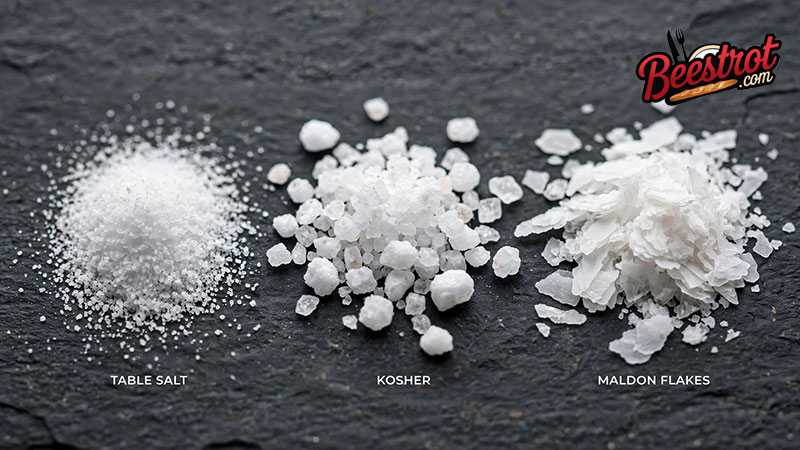
Kosher salt is the workhorse. Large, pure crystals, no additives, no iodine, no metallic aftertaste. It is what goes into the pasta water, onto the meat before it goes in the pan, and into sauces as they cook. The large crystals dissolve slowly and evenly, which gives you control. One tablespoon of kosher salt is significantly less salty than one tablespoon of table salt because the crystals are less dense. This is why recipes developed in professional kitchens that specify salt without qualification mean kosher salt, and why following those recipes with table salt will produce oversalted results.
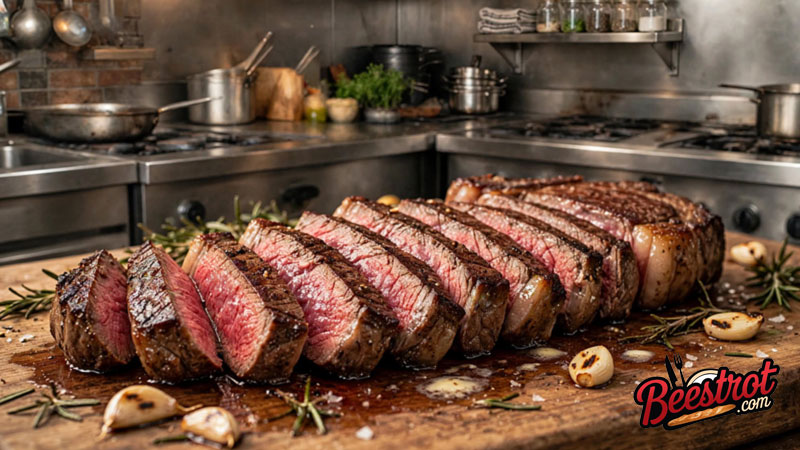
Finishing salt is what goes on at the very end, directly onto the plated dish. Fleur de sel, Maldon sea salt, or any quality flaked sea salt. The point is texture and immediacy: these crystals dissolve on your tongue rather than in the dish, delivering a burst of clean salinity that frames the whole bite. A finished steak with a pinch of Maldon is not just saltier than a steak without it. It is a different experience.
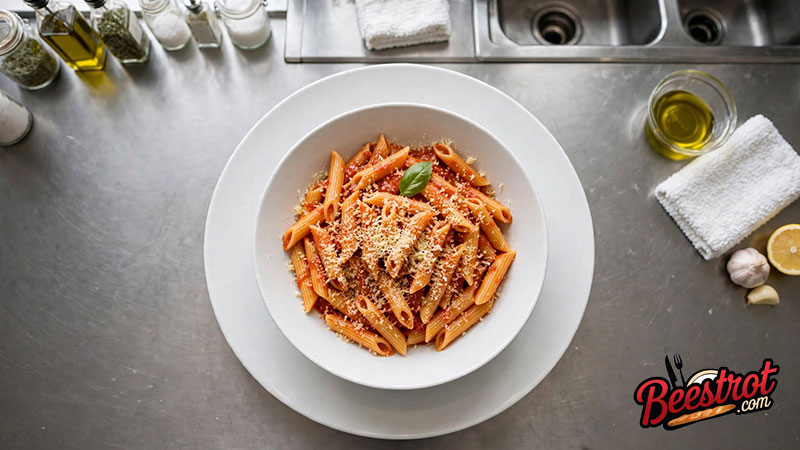
There is a third salt that home cooks never use and that professional kitchens never stop using: the salt in the cooking water. Pasta water should taste like the sea, as I have said before. But the same principle applies to blanching vegetables. Water that is properly salted before vegetables go in will season them from the outside in as they cook. Water that is not salted will actually draw minerals out of the vegetables into the water, leaving them duller and less flavourful than they were raw. The salt in the water is not about making the vegetables taste salty. It is about making them taste like themselves, only more so.
One practical note on the fear of oversalting, because I hear this from home cooks constantly: it is much harder to oversalt with kosher salt than with table salt, precisely because of the crystal size. If you switch to kosher salt and season in layers rather than all at once, your control over the final result increases dramatically. You are adding less total salt than you think, more often, with more precision.
The flat taste you have been trying to fix with more salt at the end of cooking is not caused by insufficient salt. It is caused by salt applied too late and too infrequently to do its actual job.
Salt early. Salt in layers. Finish with something that has texture.
That is thirty years of professional cooking reduced to eleven words.
The kitchen never lies. History sometimes does.
Jean Louis
Sources
- Professional Culinary Skills. Flavor Pairing and Seasoning. Salt types, layering technique, finishing salts.
- Serious Eats. The Food Lab: The Importance of Salt in Cooking.
- America’s Test Kitchen. How and When to Salt Food for the Best Results.