Last Updated on October 6, 2026 by Jean Louis
I am going to tell you something that took me years to admit, and longer still to understand. The reason your tomato sauce does not taste like the one you had in Rome, or Naples, or your Italian grandmother’s kitchen, is almost certainly not the tomatoes.
It is the time. And the heat. And the one ingredient that no Italian recipe in English ever seems to mention directly, perhaps because in Italy it goes without saying.
But first, let me confess something about the way most of us cook tomato sauce, because I did it this way for a long time and I know exactly how it feels to defend it.
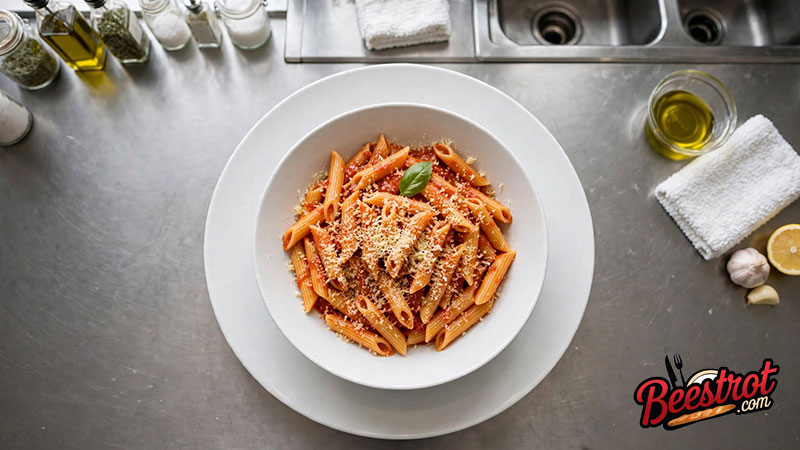
The standard approach: heat olive oil, soften some garlic, add a tin of tomatoes, season, simmer for twenty minutes, serve. It is not a bad sauce. It is a perfectly functional sauce. It will coat pasta, feed people, and generate no complaints. But it will taste like tinned tomatoes cooked with garlic, because that is precisely what it is. The Italian version tastes like something that has been transformed. The tomatoes lose their tin, lose their acidity, lose their rawness, and become something deeper and rounder and quieter. Twenty minutes does not do this. You cannot rush a transformation.
The first secret is time, and it is not a small adjustment. A proper Italian tomato sauce should cook for a minimum of forty-five minutes on a low flame, and an hour is better. Not a rolling boil. A lazy, occasional bubble at the surface, the kind where you can watch and count the seconds between each movement. This is not simmering in the sense most home cooks understand the word. It is something closer to thinking. The sauce is doing something slow and chemical: the water is evaporating, concentrating the flavour, the sugars are caramelising gently, the acidity is mellowing. At twenty minutes, none of this has happened. At forty-five, you are in a different kitchen.
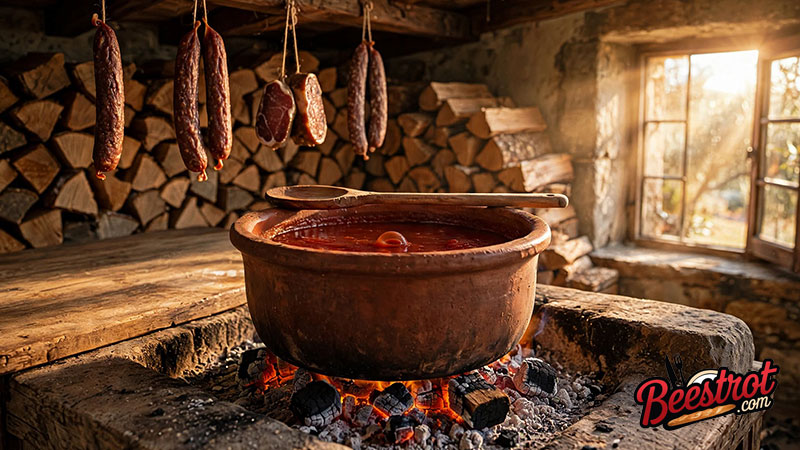
The second secret is what you cook it in. Cast iron or a heavy-bottomed pan that distributes heat evenly and holds a steady, low temperature. The sauce should never catch, never colour on the bottom, never accelerate beyond its own unhurried pace. A thin pan on a high flame produces a different sauce, even with identical ingredients. The vessel matters.
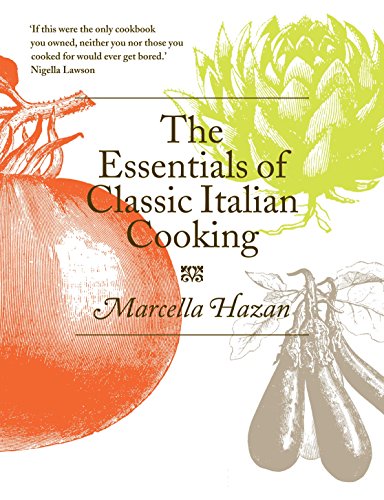
The third secret is the one I promised, and it is the one that divides opinion most sharply, because it sounds wrong until you try it. Marcella Hazan’s recipe for the most fundamental Italian tomato sauce contains three ingredients: tinned tomatoes, a halved onion, and butter. No garlic. No olive oil. No herbs of any kind except perhaps a basil leaf dropped in near the end. The onion goes in halved, not chopped, not sweated first, just placed cut-side down in the cold butter with the tomatoes, and the whole thing cooks together for forty-five minutes. Then you remove the onion and discard it. It has done its work. What remains is a sauce of such unexpected sweetness and depth that the first time you taste it, you will stand at the stove slightly confused by how simple it was.
The butter is the confession. Italians use butter in their cooking far more than the olive oil narrative suggests, particularly in the north. Emilia-Romagna, Lombardy, Piedmont: these are butter kitchens. The richness butter adds to a tomato sauce is not the same richness as cream. It is quieter, more integrated, more like the fat is part of the sauce rather than something added to it. It rounds the acidity in a way that olive oil does not, because butter contains milk proteins that bind with the acidic compounds in the tomato and soften them. This is chemistry, but you do not need to understand the chemistry. You just need to try it once.
There is a fourth secret, smaller than the others but worth mentioning. Salt the sauce at the beginning and taste it again at the end. By the time the sauce has reduced for forty-five minutes, the salt concentration will have increased as the water evaporates. What tasted right at the start may need nothing more at the end, or it may need a small correction. Either way, tasting at the end is not optional. It is the last conversation between the cook and the sauce, and it should always happen.
I spent a week in Bologna some years ago, eating in small restaurants that had no particular reputation and no interest in tourists. Every table had a pasta al pomodoro on the menu. Every version tasted like the sauce had been made by someone who had nowhere else to be. The depth was not from complexity. It was from patience. Low heat, enough time, butter where you least expected it. I came home and threw away the recipe I had been using for fifteen years. It took me three attempts to get it right with the new one. On the fourth attempt, I stood at the stove and recognised something I had tasted in Bologna.
The secret Italy never tells you is that Italian cooking is not complicated. It is disciplined. The ingredients are few, the technique is simple, and the variable that cannot be faked or accelerated is time. Every shortcut you take shows up in the bowl. Not as a failure, exactly. Just as the absence of something that patience would have put there.
Lower the flame. Put the butter in. Go do something else for forty-five minutes.
The sauce will wait for you.
The kitchen never lies. History sometimes does.
Jean Louis
Want to cook like a professional? These books will close the gap.
Sources
- New York Times Cooking. Marcella Hazan’s Tomato Sauce. The three-ingredient recipe, butter and onion technique, 45-minute minimum.
- Serious Eats. The Food Lab: The Science of Tomato Sauce. Chemistry of reduction, acidity mellowing, butter binding milk proteins.
- Bon Appetit. The Tomato Sauce That Changed Everything. Hazan butter recipe impact, why butter works differently than olive oil.